

Clinically reviewed by
Dr. Boris Lipovetskiy, DMD
Most dental visits follow the same routine: address the issue and send you on your way. Holistic dentistry — also called biological dentistry — works differently. Instead of treating dental issues as isolated problems, it asks a deeper question: why is this happening, and what does it mean for your overall health?
This distinction extends beyond philosophy — it informs the materials your dentist selects, the diagnostics they use, and how they approach everything from aging restorations to bite-related discomfort. In this article, we'll walk through what holistic dentistry actually looks like in practice — and help you decide whether this approach makes sense for you.
What Does a Holistic Approach Actually Mean?
Holistic dentists operate on a fundamental principle – oral health and systemic wellness are inseparable. Research shows meaningful connections between specific teeth, their nerve pathways, and distant organ systems – a principle that shapes how we plan every procedure. In our daily holistic practice, this philosophy comes down to two core priorities:
- Strictly Biocompatible Materials: We exclusively utilize safe, non-allergenic resources. By avoiding known toxins, we prevent the biological rejection or systemic burden often caused by conventional metals.
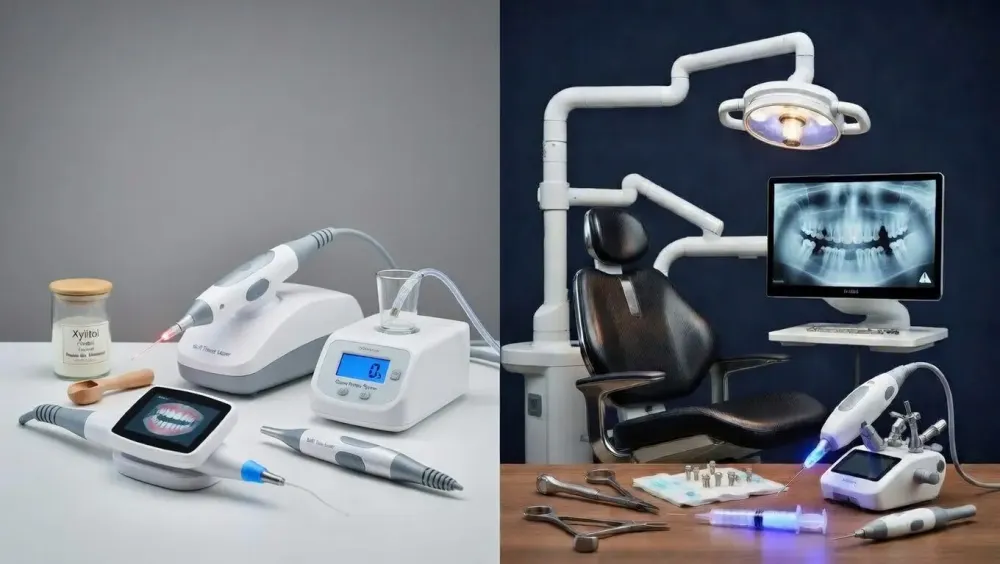
- Conservative, Gentle Protocols: Our primary objective is keeping your original tooth structure intact. Through modern innovations like ozone treatment and laser therapies, we prompt your body's innate healing mechanisms rather than relying on aggressive interventions.


Doctor’s take
With more than 33 years in practice, Dr. Boris Lipovetskiy describes his approach this way:
“I see my role as more than just fixing teeth. My goal is to be a comprehensive healthcare provider—identifying and addressing underlying systemic conditions through a careful evaluation of your oral health.”
Core Differences of Holistic & Traditional Dentistry
| Aspect | Traditional Dentistry | Holistic Dentistry |
|---|---|---|
| Primary Focus | Fixes localized problems and manages symptoms as they arise. | Investigates underlying causes to promote full-body wellness and prevent future disease. |
| Handling Mercury | Views existing silver fillings as structurally sound until they physically break or decay. | Treats mercury as an active neurotoxin. We extract them using the strict IAOMT SMART protocol to eliminate toxic vapor exposure for both you and our staff (Safe Mercury Amalgam Removal Technique). |
| Diagnostics | Standard visual checks combined with routine 2D radiography. | Incorporates low-radiation 3D CBCT imaging, pH assessments, and advanced digital tools (iTero, Tekscan, Kodak intra-oral cameras) for a comprehensive diagnostic overview. |
| Prevention | Heavily reliant on fluoride applications to harden enamel. | 100% fluoride-free. Holistic dentists protect enamel using xylitol, oral probiotics, dental ozone, and diet modifications to avoid toxic accumulation in the body. |
| Handles tough cases | Performs routine root canals to preserve a non-vital (dead) tooth. | Strictly avoided. Research suggests that necrotic teeth can serve as a persistent source of low-grade bacterial infection — a systemic risk we take seriously. |
What Holistic Dentistry Can and Can't Do: An Honest Look
Holistic dentistry isn't for everyone, and we say that honestly. If you need a fast, low-cost repair and have no underlying health concerns, a general dentist may serve you better for that specific need. Our approach takes more time and diagnostic investment — because we're looking at the full picture, not just the tooth in front of us. We'll always tell you upfront if your case is outside our scope.
What Research Says: Oral Health and Chronic Disease
Some skeptics argue that the link between oral inflammation and chronic illness lacks hard evidence. Nevertheless, a growing body of peer-reviewed research informs us of a bidirectional relationship between severe gum disease (periodontitis) and systemic threats:
Diabetes Management
A 2018 meta-analysis published in the Journal of Clinical Periodontology found that periodontal infection increases Type 2 diabetes risk by 19% to 26%, while uncontrolled blood sugar simultaneously worsens gum deterioration.
Heart Health
Chronic oral inflammation is associated with a 20% to 34% jump in cardiovascular disease risks.
Chronic Lethargy
Unresolved dental infections may repeatedly activate your immune response, contributing to chronic low-grade inflammation.

My Journey into Holistic Dentistry — In Dr. Lipovetskiy’s Words
Prior to 2012, my daily routine was rooted entirely in standard dental practices. I routinely placed traditional fillings and implants, securing results that looked fine on paper. Yet, I noticed a frustrating trend: numerous patients still complained of enduring fatigue, migraines, and general illness despite having perfectly 'repaired' teeth.
The turning point was a seminar with Dr. Jerry Tennant, whose research on cellular healing and bioelectric medicine reshaped how I think about every patient I see. He illuminated how supposedly isolated issues – like the continuous toxic off-gassing from mercury fillings or the silent bacterial breeding grounds inside root-canaled teeth – systematically break down our immune defense. That seminar shifted my entire approach — I began applying a whole-patient, biological philosophy to every case.
In my practice, I've seen patients whose chronic fatigue markers improved measurably after SMART amalgam removal — not as a miracle cure, but as the removal of a persistent inflammatory trigger the immune system had been quietly fighting for years.
Holistic or Traditional Dentistry: Which One Is Right for You?
Ultimately, the right dental approach depends entirely on your personal health goals and your current medical condition.
Holistic care is your best option if:
From Our Practice
When a patient comes in with old silver fillings and unexplained chronic fatigue, our first step isn't removal – it's a Tekscan occlusal analysis and a 3D CBCT scan to understand the full picture before we touch anything.
FAQ
Most basic PPO plans will cover standard exams, cleanings, and simple composites. However, many specialized holistic dental services fall outside standard PPO coverage. To keep your treatment accessible, we utilize transparent pricing models and partner with CareCredit®, enabling you to spread out payments—frequently with zero-interest options for 6 to 24 months.