
Dental Bridges in Fort Lauderdale
4.8 rating on Google · 338+ reviews
A dental bridge is planned around the condition of the supporting teeth, the bite, and the way chewing forces are distributed.
Dr. Boris Lipovetskiy uses these factors to design a stable, natural-looking solution for one or more missing teeth. For patients who need to replace most or all teeth in an arch, advanced titanium All-on-4 implants may be considered instead of a conventional tooth-supported bridge.
- 33+ Years Experience
- Digital Scan & Bite Analysis
- Financing Available
- Written Estimate


Request a personalized treatment plan and a written estimate.
At the ADW Center, we use ceramic and zirconia to create durable dental bridges with a natural appearance.
The cost is calculated individually based on the bridge length, the number of teeth being replaced, the selected material, and the condition of the abutment teeth.
Schedule an ConsultationWhat Is a Dental Bridge?
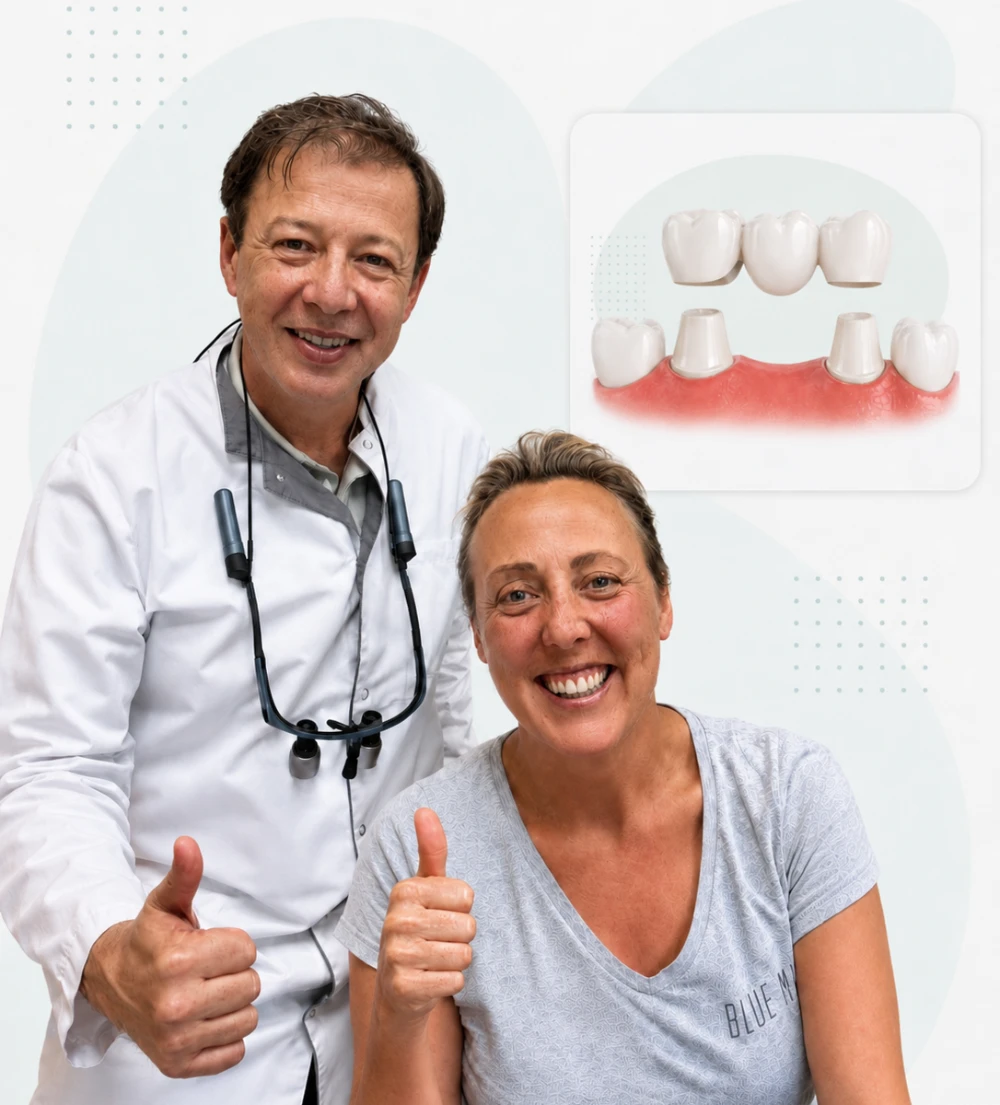
A dental bridge is a fixed restoration that replaces one or more missing teeth. Crowns on the adjacent teeth support the artificial unit that fills the gap. Dental bridges are one of the tooth-replacement options used in prosthodontic treatment.
The design takes into account the abutment teeth, the bite, and chewing forces.
Real Cases of Dental Bridges

Dr. Boris Lipovetskiy restored the area with a custom zirconia bridge.
The result looked natural and harmonious.
Dr. Boris Lipovetskiy restored the gap with a dental bridge.
The result looked natural and improved comfort.
When Is a Dental Bridge Recommended?
A dental bridge may be recommended when one or more teeth are missing and the surrounding teeth can provide support. Dr. Lipovetskiy also evaluates the gums and bite before recommending treatment.


One Missing Tooth A bridge can close a single gap when the neighboring teeth can provide reliable support. g
Several Missing Teeth A longer bridge may replace multiple teeth, depending on the location of the gap and the strength of the supporting teeth.
Neighboring Teeth Need Crowns A bridge may be practical when the adjacent teeth already require crowns.
A Damaged Tooth Next to a Gap Treatment may involve a dental bridge or an implant with a separate crown, depending on the condition of the surrounding teeth.
When both neighboring teeth are healthy, a dental implant may be a more conservative option because it usually leaves them untouched.
Dental Bridge Cost in Fort Lauderdale
The cost is calculated on a case-by-case basis, as each restoration varies in length, material, and the condition of the abutment teeth.
- the recommended design;
- the selected material;
- any additional treatment required;
- the expected treatment stages;
- available payment options.

Number of Units The total number of crowns and replacement teeth included in the bridge.
Restoration Design The length of the missing area and the type of support required.
Selected Material Ceramic, zirconia, and high-strength options differ in their clinical indications and cost.
Supporting Teeth Teeth that require additional restoration or preparation may affect the final treatment plan.
ADW Center works with PPO insurance plans. CareCredit financing is also available for eligible patients, subject to approval. A personalized estimate is provided after the examination, before treatment begins.
Dental Bridge Planning
Before selecting the design and material, Dr. Boris Lipovetsky evaluates the supporting teeth, gums, bite force, and signs of teeth grinding.

Dr. Lipovetskiy checks the supporting teeth, existing restorations, and gums to confirm they can provide stable support for the bridge.
The bite affects how much pressure a bridge receives. Grinding, clenching, or uneven contact may influence its design and material.

For heavier bite forces or bruxism, zirconia or high-strength BruxZir may be considered. The choice depends on the location and esthetic goals.

For patients with bruxism, I usually consider zirconia crowns and bridges because of their strength. When bite forces are especially high, we may use a high-strength zirconia such as BruxZir.
Dental Bridge Treatment Process
The restoration process consists of several distinct steps:
Dr. Boris Lipovetskiy examines the missing area, neighboring teeth, gums, and bite. He confirms whether a fixed restoration is appropriate or whether another replacement option should be considered.
The abutment teeth are prepared for crowns. A digital scan is performed or a traditional impression is taken, after which the shape and shade of the restoration are planned. For restorations in the visible smile zone, Digital Smile Design can help preview tooth proportions before the final bridge is made.
A temporary dental bridge may be placed while the final restoration is being made. It helps protect the prepared abutments and maintain appearance and everyday function between visits.
During final placement, Dr. Lipovetskiy checks the fit, interproximal contacts, shape, shade, and bite. The restoration is then secured, with a bite adjustment performed if needed.
Ask what to expect during and after your procedure.
Dental Bridge or Implant: Which Option May Be Right for You?
There is no single best solution for every missing tooth. The right option depends on factors such as the condition of the neighboring teeth, available bone, bite forces, treatment timeline, and the patient’s goals and preferences.
Both options restore the missing area in different ways. A dental implant with a crown replaces the gap independently, while a traditional bridge relies on crowned abutments for support.
| Comparison | Traditional Dental Bridge | Dental Implant |
|---|---|---|
| Support | Supported by crowned abutments | Supported by an implant placed in the jawbone |
| Adjacent teeth | Usually prepared for crowns | Usually remain untouched |
| Surgery | Not required | Required |
| Treatment timeline | Often shorter | Usually longer because healing is needed |
| May be considered when | Adjacent units already need crowns or major restoration | Adjacent dentition is healthy and sufficient bone is available |
When the adjacent units already need crowns, a dental bridge may be a practical way to restore the missing area. If the surrounding dentition is healthy, I may recommend an implant with a separate crown because it usually avoids preparing adjacent structures. I also consider the available bone, bite forces, and overall clinical situation before making a recommendation.
Dr. Boris Lipovetskiy will evaluate the adjacent dentition, bone support, bite forces, and treatment goals to determine which option may be more appropriate for your case.
Dental Bridge FAQs
Is a Dental Bridge Better Than an Implant?
A fixed restoration may be practical when the adjacent units already need crowns. An implant can restore the gap without reshaping healthy dentition. The right choice depends on bone support, bite forces, gum health, and the condition of the surrounding area.
Can I Get a Dental Bridge if I Grind My Teeth?
Bruxism does not automatically rule out this treatment. However, it increases pressure on the restoration, so the design and material require careful planning. Dr. Lipovetskiy may consider zirconia or high-strength BruxZir when appropriate, depending on the location, bite forces, and esthetic needs.
How Many Teeth Can a Dental Bridge Replace?
There is no one-size-fits-all span that is suitable for all patients. The decision depends on the location, number, and condition of the abutment teeth, the length of the restoration, and the force generated during occlusion.
How Do I Clean Under a Dental Bridge?
The area beneath the replacement unit should be cleaned every day because a regular toothbrush cannot fully reach it. A floss threader, interdental brush, or another tool recommended by the dentist may be used. Good daily care also includes regular brushing, professional checkups, and monitoring the abutments and gums.
How Long Does Dental Bridge Treatment Take?
Treatment usually requires several visits. The total time depends on abutment preparation, fabrication of the restoration, and whether a temporary prosthesis is needed. After the examination, Dr. Lipovetskiy will explain the recommended steps and provide an individual timeline.