

Clinically reviewed by
Dr. Boris Lipovetskiy, DMD
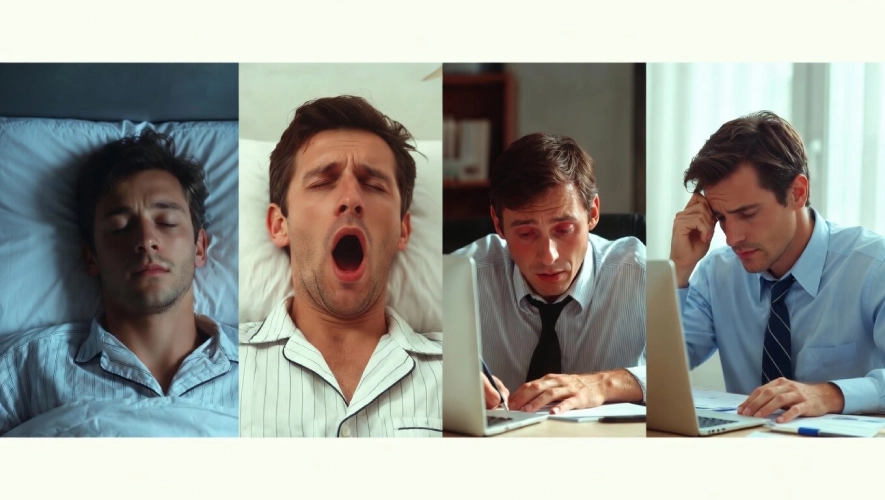
Spending eight or nine hours in bed shouldn't leave you feeling drained the next day. If you wake up with throbbing headaches, struggle to stay alert while driving, or notice premature wear on your teeth, something deeper is likely wrong. If you're looking for sleep apnea treatment in Fort Lauderdale, the first step is understanding what's driving these symptoms.
Understanding Obstructive Sleep Apnea (OSA)
The root of Obstructive Sleep Apnea (OSA) is often structural. A narrow upper jaw, a misaligned bite (malocclusion), or a recessed lower jaw leaves the tongue without enough room to rest flat. As your throat muscles relax during sleep, these soft tissues collapse backward, partially or completely blocking your breathing passages. Because of this mechanical blockage, a dentist trained in Airway Dentistry, a dental discipline focused on how oral anatomy affects breathing and sleep, can often provide the most targeted, lasting solution.
The Physiology of a Sleep Apnea
When your oxygen saturation drops rapidly, it sparks a dangerous buildup of carbon dioxide in the bloodstream. Detecting this crisis, your brain triggers an adrenaline rush to force an awakening. Your airway muscles spasm, usually resulting in a sudden, loud gasp or choking sound.
This sequence loops constantly throughout the night. You rarely remember these micro-awakenings, but they completely destroy your natural sleep cycles. You may think you got 8 hours of quality sleep, yet you only receive a fraction of that in actual, restorative rest. Globally, this health crisis impacts an estimated 24% of middle-aged men and 9% of women.

The Role of a Holistic Dentist in Treating Sleep Apnea
Historically, doctors prescribe CPAP machines to manage airway blockages. While undoubtedly effective at keeping the airway open, this method demands strapping a cumbersome mask to your face. Unsurprisingly, many users abandon the treatment, comparing the claustrophobic experience to sleeping in scuba gear.
At Advanced Dental Wellness, our Airway Dentistry approach targets the anatomical root cause of the obstruction. We design comfortable, custom Mandibular Advancement Devices (MAD).
These oral sleep appliances work by gently guiding your lower jaw into a healthy, slightly forward posture overnight. This minor shift naturally prevents soft tissue collapse, keeping the airway clear without any hoses or masks—while simultaneously shielding your teeth from nighttime grinding.
To ensure a precise, anatomically accurate fit, our team uses the iTero digital scanner to capture precise digital impressions of your dental anatomy. We also utilize 3D CBCT scans for a comprehensive view of your airway structure. This technology enables us to engineer a dental sleep device tailored specifically to you, setting you up for your first truly restorative night's sleep.
The Hidden Health Toll of Untreated Sleep Apnea
Every single time your airway collapses, it places significant, compounding stress on both your cardiovascular and nervous systems.
Here is the silent damage caused by untreated OSA:
Persistent Hypertension: Oxygen drops force an immediate spike in blood pressure. Eventually, your vascular system adapts to this high-alert state, resulting in chronic hypertension that is difficult to manage with medication alone [2].
Systemic Inflammation: The recurring lack of oxygen floods your bloodstream with inflammatory biomarkers. This constant inflammation degrades blood vessel integrity, accelerates arterial plaque accumulation, and drastically magnifies your risk of cardiovascular events.
Cellular Oxidative Stress: Deprived of oxygen, cells generate unstable free radicals. These molecules break down cellular structures over time — similar to how oxidation degrades metal, damaging DNA and accelerating chronic disease onset.
Daily Symptoms You Might Be Experiencing

Morning Migraines
Nighttime carbon dioxide accumulation forces blood vessels inside your skull to expand, building pressure – which is why you wake up with that characteristic throbbing headache.

Severe Bruxism (Teeth Grinding)
In a desperate bid to force the airway open, your brain commands the jaw muscles to clench violently. This nocturnal grinding destroys dental enamel, cracks restorations, and causes intense jaw soreness by morning.
Chronic Lethargy
A fragmented sleep architecture deprives you of crucial REM stages. The result is plummeting focus, mood swings, and a 250% higher likelihood of being involved in a traffic collision due to drowsiness.
Cardiovascular Vulnerability
The combined burden of systemic inflammation, unstable blood pressure, and cardiac oxygen deprivation creates a perfect storm for heart attacks, irregular heartbeats, and eventual heart failure.
Identifying Key Sleep Apnea Symptoms
Nocturnal Red Flags (Usually Observed by a Bed Partner):
Loud, irregular snoring interrupted by noticeable pauses in breathing.
Visible breathing pauses lasting anywhere from 10 to 60 seconds.
Choking, gasping, or snorting noises.
Sudden awakenings with a sensation of breathlessness or choking.
Drenching night sweats.
Frequent nighttime bathroom trips, triggered by the body's stress response.
Daytime Indicators:
Crushing daytime fatigue, including nodding off during meetings or commutes.
Waking up feeling unrefreshed, often accompanied by a parched throat and dry mouth.
Intense morning brain fog or cranial heaviness.
Unusual mood swings, poor memory recall, and diminished focus.
Who Is Most at Risk for Sleep Apnea?
High BMI (>30). Excess fatty deposits around the neck physically compress the upper airway.
Specific Facial Anatomy. Individuals with narrow palates, enlarged tonsils, a prominent tongue, or a recessed lower jaw are anatomically predisposed to throat blockages.
Middle-Aged Men. Males between 30 and 60 experience a more pronounced relaxation of throat muscle tone during sleep.
Post-Menopausal Women. The natural drop in estrogen diminishes protective airway muscle tension, rapidly elevating the risk profile to match that of men.
Sleep Apnea Treatment Options
| Treatment Method | How It Works |
|---|---|
| CPAP Therapy | Delivers a continuous stream of pressurized air through a mask to keep the airway from collapsing. |
| Custom Airway Dentistry Appliance (MAD) | A personalized oral alternative. This dental device comfortably shifts the lower jaw forward to maintain an open airway naturally. It operates without cords, masks, or noise, making it the preferred choice for mild-to-moderate cases and CPAP-intolerant individuals. |
| Positional Sleep Training | Utilizing specific wearables or contoured pillows to prevent sleeping on your back, minimizing gravity's role in airway collapse. |
The Diagnosis & Treatment Process
At Advanced Dental Wellness, we facilitate a hassle-free, at-home sleep assessment. You sleep in the comfort of your own bedroom wearing a lightweight monitoring sensor. The collected metrics are then evaluated by an independent, board-certified sleep physician (MD) who issues a formal medical diagnosis.
If the data confirms mild to moderate obstructive sleep apnea, Dr. Boris Lipovetskiy will capture digital scans of your teeth to fabricate your tailored Mandibular Advancement Device, paving the way for uninterrupted rest.
Is a Custom Sleep Apnea Oral Appliance Right for You?
Our MAD therapy is a strong fit for:
Mild to moderate OSA (AHI — Apnea-Hypopnea Index, the number of breathing interruptions per hour — between 5 and 30).
Chronic loud snorers without a formal diagnosis.
CPAP-intolerant patients seeking a comfortable alternative.
Frequent travelers needing a portable solution.
Severe apnea patients using a custom MAD alongside CPAP for enhanced efficacy (always coordinated with a sleep specialist).
The Connection Between Sleep Apnea and Teeth Grinding
When oxygen flow stops, your brain treats the event as a critical emergency. To stay alive, it orders a massive muscular contraction, specifically targeting the jaw, to violently thrust the lower jaw forward and reopen the windpipe. This aggressive, friction-heavy clenching is known clinically as sleep bruxism.


Clinical Observation From Our Practice
Drawing on 33 years of clinical experience, Dr. Lipovetskiy consistently spots this destructive pattern. In our practice, we regularly see patients who exhibit these specific clinical markers:
Severely flattened chewing surfaces and blunted canines.
Deeply fatigued, aching masseter muscles in the morning.
Pain, popping, and dysfunction within the temporomandibular joint (TMJ).
To measure this trauma accurately, our clinic goes beyond visual inspections. We deploy Tekscan sensors to map the precise force and distribution of your bite, and utilize the iTero digital scanner to uncover microscopic structural cracks. By treating the anatomical root cause of the obstruction, many patients report a significant reduction in grinding — and in some cases, it stops altogether.
Top-5 Adjustments That Help Manage Sleep Apnea Symptoms
While these adjustments offer temporary symptomatic relief, they cannot fix the structural anatomical defects causing Obstructive Sleep Apnea.
FAQ
Absolutely. Contemporary Home Sleep Apnea Tests (HSAT) are incredibly precise. You simply wear a compact tracker to bed that monitors your heart rate, oxygen saturation, and respiratory effort. It serves as an excellent diagnostic starting point. Only highly complex clinical presentations require an overnight stay in a polysomnography lab.
This article is for informational purposes only and does not constitute medical advice. Please consult a qualified healthcare provider for diagnosis and treatment.