
The author of the article
Boris Lipovetskiy, DMD, 31 years experience
Boris Lipovetskiy, DDS, who brings 31 years of experience to the Advanced Dental Wellness Center in Fort Lauderdale, prepared this guide for anyone considering orthodontic treatment but unsure where to start.
Did your dentist notice a bite issue during a routine checkup? Or are you simply unhappy with how your smile looks in photos? Either way, you’re likely wondering: do I actually need braces, and how will they change my life?
Some believe braces are outdated and that clear aligners are always the better choice for fixing a bite. However, modern braces aren’t just "metal tracks" on your teeth; they are high-tech systems. For adult patients, the choice often isn't whether to seek treatment, but rather choosing between time-tested classics and modern, discreet methods.
What Are Braces?
Braces are a mechanism designed to gently realign teeth. The system creates constant, precisely calculated pressure that gradually moves teeth into their correct positions.
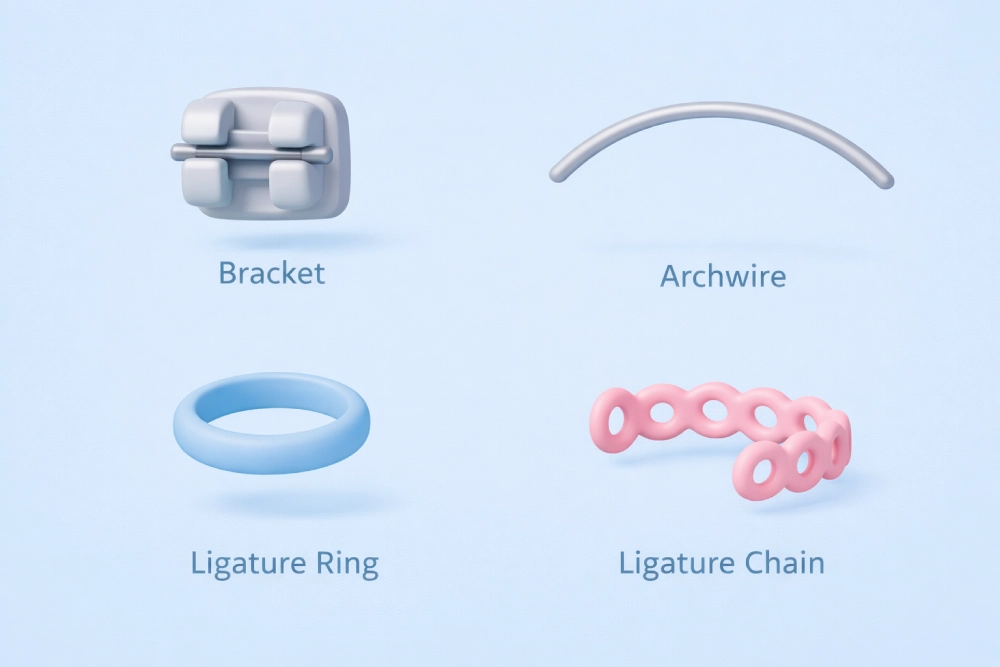
The system consists of three main elements:
Brackets: Miniature anchors bonded to each tooth.
Archwire: The "engine" of the system. It connects the brackets and constantly tries to return to its pre-set shape, pulling the teeth along with it.
Ligatures: Ties or built-in clips (in self-ligating systems) that hold the archwire securely in the bracket slots.
Types of Braces and Why They Are Necessary
The right system depends on the complexity of your case and your aesthetic preferences:
Metal Braces: The most reliable and affordable option. Made of high-grade stainless steel, they can correct even the most severe bite misalignments.
Ceramic Braces: These are color-matched to your tooth enamel, making them nearly invisible when you smile. They are an excellent choice for adults who prioritize aesthetics during treatment.
Orthodontic treatment does more than just straighten your smile; it helps maintain overall oral health. When teeth are properly aligned, biting forces are distributed evenly. This reduces strain on the temporomandibular joint (TMJ) and makes chewing easier. Hygiene also becomes simpler because there are fewer hard-to-reach areas for plaque to hide.
Braces vs. Aligners Which is Right for You?
| ISSUE | RECOMMENDED TREATMENT |
|---|---|
| Minor crowding | Clear aligners |
| Severe crowding | Braces |
| Gaps (diastemas) | Aligners, braces, or veneers |
| Malocclusion (bad bite) | Braces or aligners |
| Chewing difficulties | Braces or aligners |
Pros and Cons of Traditional Braces
ADVANTAGES
Can correct even the most complex cases
Cannot be lost or "forgotten"
Precise control over every tooth
Usually more affordable than premium aligners
DISADVANTAGES
Visible when smiling or speaking. Ceramic systems may stain over time.
Require dietary restrictions (no nuts or sticky candy).
Make daily brushing and flossing more challenging.
May cause irritation to soft tissues during the adjustment period.
When Is It Time to See an Orthodontist? Key Indications
Braces aren't just for "crooked teeth." Often, hidden issues lead to chronic pain or enamel erosion.
Crowding and rotated teeth.
Bite misalignments: Deep, open, or crossbites (where the jaws don't meet correctly).
Pre-prosthetic preparation: Creating enough space for a future dental implant or crown.
Impacted teeth: Teeth that are "stuck" in the bone and cannot erupt on their own.
How Are Braces Installed?
The procedure takes 60–90 minutes and is comfortable enough to be performed without anesthesia.
Preparation:
The tooth surfaces are thoroughly cleaned and dried. This is crucial for ensuring the braces bond securely to the enamel.
Applying Adhesive:
A special bonding agent is applied to the enamel and hardened using a curing light.
Fixing Brackets:
The brackets are glued to the tooth surfaces. The position of each bracket is calculated in advance, as this determines the direction the tooth will move.
A metal wire is threaded through the slots of all the brackets. It is secured with ligatures or clips. This wire creates the pressure that begins moving the teeth.
Instructions:
The doctor explains how to brush with braces, what foods to avoid, and when to return for the first adjustment. They will also warn you that you may feel pressure or soreness for a few days after installation.
What Is the Best Way to Fix a Bite?
Clear aligners are definitely worth considering. Throughout my years of practice, I have treated patients with complex bite issues. More often now, we utilize clear aligners – they are highly effective, nearly invisible, removable for meals, and don't interfere with hygiene.
The final decision is made after a full diagnostic workup. X-rays reveal the position of the tooth roots and the condition of the bone tissue, which allows us to plan tooth movement safely.
We also evaluate the function of the TMJ. When necessary, we use TENS therapy to relax the jaw muscles and determine the correct physiological jaw position before starting treatment.
If you are weighing the choice between braces and aligners, schedule a consultation.
Frequently Asked Questions
No—wearing them doesn't cause constant pain. Discomfort only occurs during the adjustment period while your cheeks and lips get used to the appliance. The soft tissues usually settle within 2–3 days. You may also feel discomfort after each adjustment because the system increases pressure on the teeth. With aligners, "adjustments" simply mean moving to the next tray in the series. Since each tray moves teeth subtly, the pressure is more gradual, and discomfort is typically much milder.
Yes. Bone tissue can be remodeled at any age. Adult treatment might take slightly longer than it does for teenagers, but the results will be just as predictable results.
A retainer is prescribed. At first, it is worn constantly, then only at night. This holds the teeth in their new positions while the bone tissue fully stabilizes. Skipping this stage is the leading cause of orthodontic relapse.
Want to find out exactly what will work for your case? Schedule an appointment – we will perform a diagnostic scan and walk you through your treatment options.