


Clinically reviewed by
Dr. Boris Lipovetskiy, DMD
Teeth whitening is generally considered safe when it is used correctly and the teeth and gums are healthy enough for treatment. The most common side effects are temporary tooth sensitivity and mild gum irritation.
That does not mean every whitening method is right for every patient. Cavities, gum inflammation, cracked enamel, strong baseline sensitivity, crowns, veneers, pregnancy, and overuse of whitening products can all change the risk profile.
Professional or dentist-supervised whitening gives the dentist more control over peroxide strength, gum protection, timing, and sensitivity management.
OTC strips and gels can work for some patients, but the fit, dose, and instructions are less personalized.
DIY methods such as charcoal, lemon juice, vinegar, or household hydrogen peroxide should be avoided.
How Does Teeth Whitening Work?
Teeth whitening usually works through peroxide-based gels, such as hydrogen peroxide or carbamide peroxide. These ingredients pass into the tooth structure and break down stain molecules that make teeth look darker.
Whitening works best on natural tooth enamel affected by food, drink, tobacco, or age-related staining. It does not whiten crowns, veneers, implants, bonding, or tooth-colored fillings. If you have visible restorations, your dentist should check their shade before whitening so the final color does not look uneven.
What Side Effects Are Normal After Teeth Whitening?
Mild sensitivity and minor gum irritation can be normal after teeth whitening. These effects are usually temporary, especially when the whitening product is used as directed and the gums are protected.
Common and usually temporary
Sensitivity to cold air or drinks.
A brief zing or ache in several teeth.
Mild gum redness where gel touched tissue.
Pause and ask your dentist
Sensitivity that does not improve.
Discomfort after extending wear time.
Uneven shade around restorations.
Call promptly
Sharp, throbbing, or one-tooth pain.
Gum burns, ulcers, swelling, or pus.
Pain that gets worse instead of better.
How Long Does Sensitivity Last After Teeth Whitening?
Whitening sensitivity often improves within a few days and may settle within about a week. Some people feel sensitivity during treatment, while others notice it the next day.
Sensitivity can last longer when a high-concentration product is used, the product stays on longer than directed, trays or strips do not fit well, or exposed roots, enamel wear, cracks, cavities, or gum recession are present.
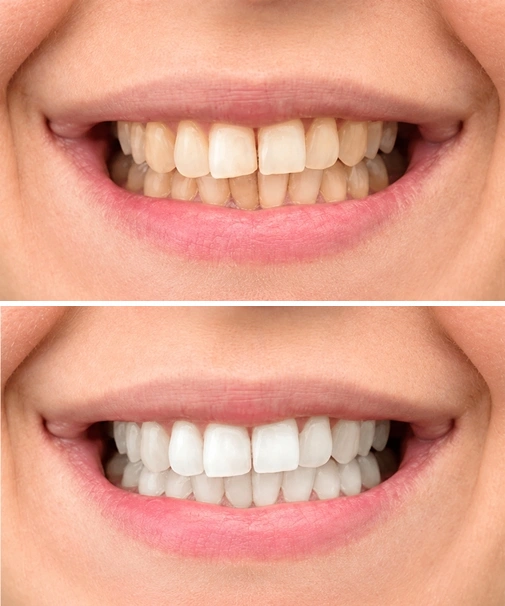
Does Teeth Whitening Damage Enamel?
Teeth whitening is not expected to permanently damage healthy enamel when appropriate products are used correctly. The bigger risk comes from overuse, poorly fitted trays, high-concentration products without supervision, or abrasive and acidic DIY methods.
For a deeper guide on enamel protection, read ADW Center's article on how to whiten teeth without damaging enamel.
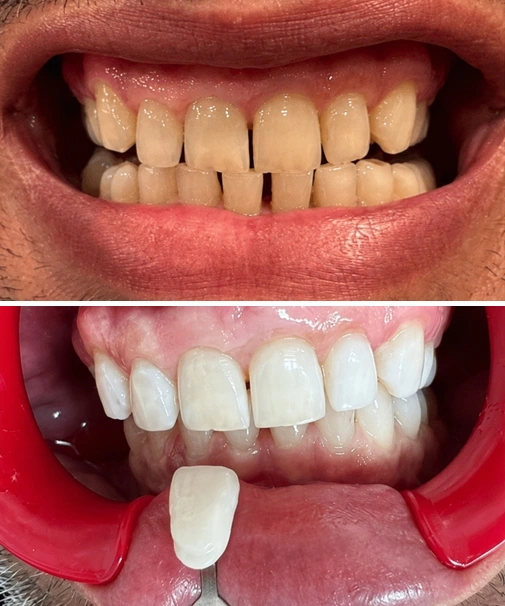
Which Whitening Methods Carry More Risk?
The risk depends on peroxide strength, contact time, product fit, gum protection, and whether a dentist has checked for cavities, cracks, exposed roots, gum disease, or restorations.
| Method | Risk Level | Why |
|---|---|---|
| In-office professional whitening | Lower when properly supervised | The dentist can protect the gums, control timing, and stop if tissue reacts. |
| Dentist-supervised take-home trays | Low to moderate | Custom trays improve fit, but the patient must follow the schedule at home. |
| OTC strips and gels | Moderate | They may work, but fit and dosing are less personalized. |
| DIY whitening methods | Higher | Acidic, abrasive, or household chemical methods can irritate tissue and damage enamel surfaces. |
If you are comparing systems, see ADW Center's guide to KoR vs. Opalescence whitening systems.
If your main question is home whitening, read the guide to dentist-supervised at-home whitening.
Who Should Wait Before Whitening?
Some patients should delay whitening until a dentist checks or treats another issue first. Whitening is cosmetic, so it should not be done on top of untreated dental problems.
Untreated cavities.
Gum disease, bleeding gums, or active inflammation.
Cracked teeth, exposed roots, or severe enamel wear
Strong tooth sensitivity before whitening.
Crowns, veneers, bonding, implants, or visible fillings in the smile zone.
A known allergy or reaction to peroxide products.
Pregnancy or breastfeeding, unless your dentist and medical clinician advise otherwise.
How Can You Reduce Whitening Risks?
You can reduce whitening risks by starting with a dental exam, choosing the right product strength, following the schedule, and stopping if pain increases.
- Have a dental exam if you have sensitivity, gum bleeding, restorations, or visible enamel wear.
- Treat cavities or gum inflammation before cosmetic whitening.
- Ask whether your stains are likely to respond to whitening.
- Review crowns, veneers, bonding, and fillings that may not match afterward.
- Use dentist-recommended desensitizing products if you are prone to sensitivity.
- Avoid acidic or abrasive DIY whitening methods.
FAQ
How long does sensitivity last after teeth whitening?
Sensitivity often improves within a few days and may settle within about a week. If it is sharp, one-sided, worsening, or lasts longer than expected, pause whitening and call your dentist.
Can teeth whitening permanently damage enamel?
Permanent enamel damage is not expected from properly used professional or dentist-recommended whitening on healthy teeth. Overuse, high-concentration products without supervision, abrasive whitening toothpastes, or acidic home remedies can raise the risk of surface changes and sensitivity.
Is it safe to whiten teeth while pregnant?
Many dentists recommend postponing elective whitening during pregnancy or breastfeeding because safety data is limited and whitening is cosmetic. Ask your dentist and medical clinician before using whitening products.
Can I whiten teeth with crowns or veneers?
You can whiten natural teeth, but crowns, veneers, bonding, implants, and fillings do not whiten. If these restorations show when you smile, whitening may create a color mismatch.
Is teeth whitening safe for enamel?
Teeth whitening is generally considered safe for healthy enamel when appropriate products are used as directed. The risk increases with overuse, poor product fit, untreated dental problems, or abrasive and acidic DIY methods.