

Clinically reviewed by
Dr. Boris Lipovetskiy, DMD
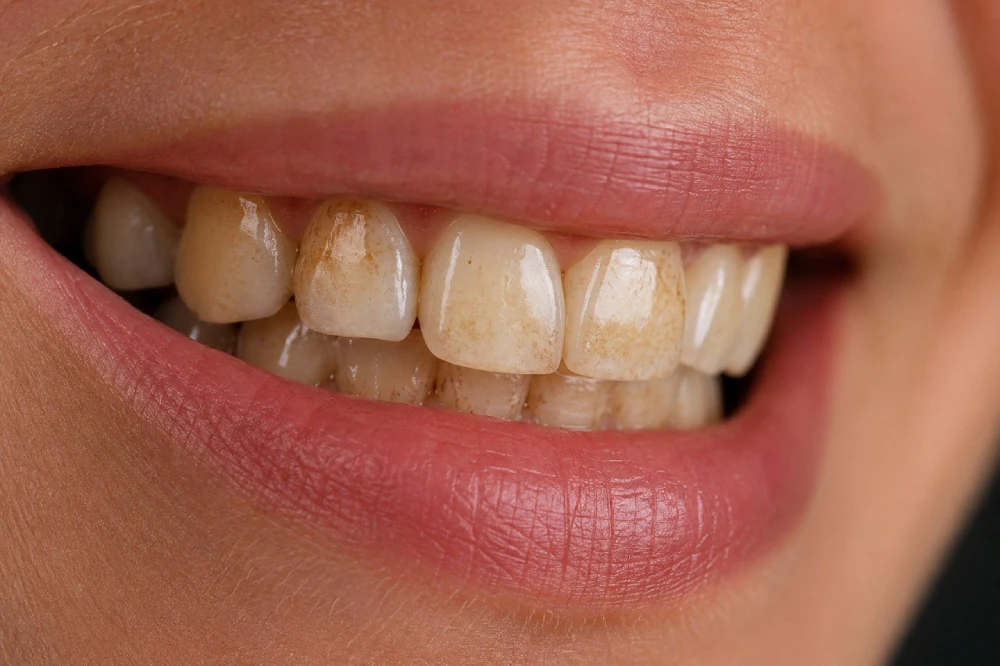
Dark buildup, yellowing, and stains on your teeth can affect the appearance of your smile and make you feel less confident about showing your teeth. If regular brushing and professional cleaning are no longer enough, the discoloration will not disappear on its own — over time, it may become more noticeable. Let’s explore what can help whiten your teeth at home and which methods may cause harm.
Why Do Teeth Get Darker? Common Causes of Discoloration
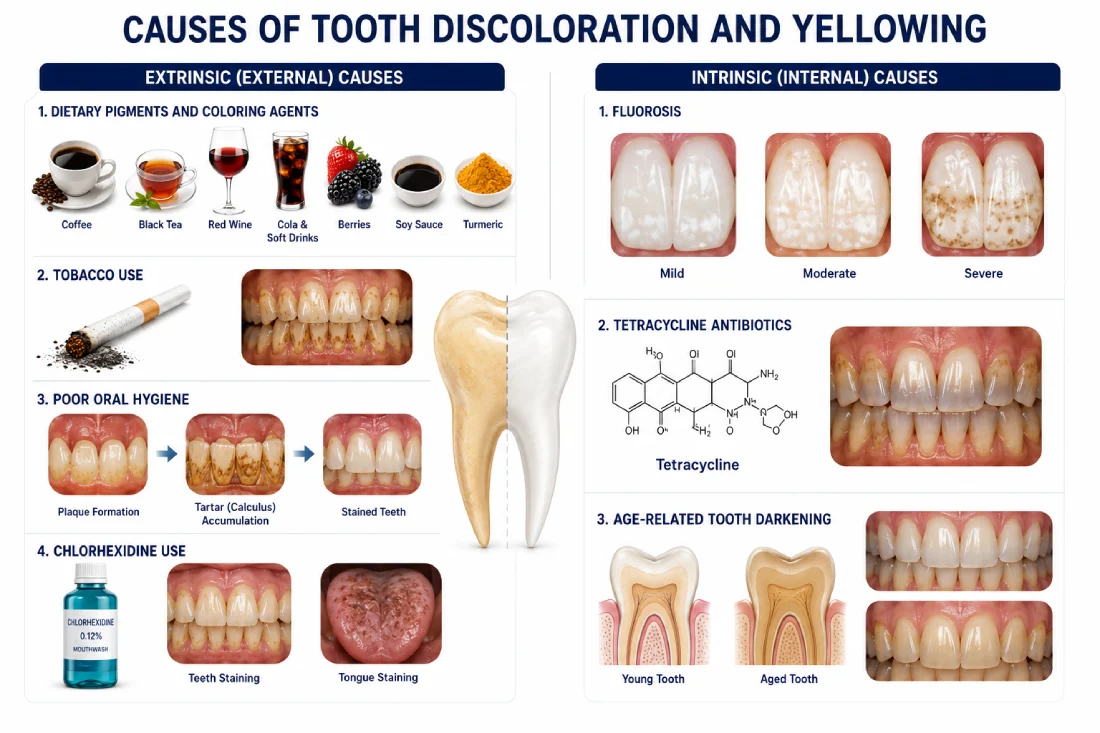
Tooth yellowing can occur due to external factors:
1. Food and beverage pigments.
Pigments found in coffee, tea, cola, red wine, berries, and brightly colored fruits and vegetables can contribute to staining. They attach to the thin protective film on the teeth (the pellicle) and form surface stains. The longer these stains remain on the teeth, the more firmly they adhere and the harder they become to remove.
2. Smoking.
Pigments found in coffee, tea, cola, red wine, berries, and brightly colored fruits and vegetables can contribute to staining. They attach to the thin protective film on the teeth (the pellicle) and form surface stains. The longer these stains remain on the teeth, the more firmly they adhere and the harder they become to remove.
3. Poor oral hygiene.
Skipping regular brushing and professional cleanings allows plaque to mineralize. Within 2–3 days, plaque can begin hardening into tartar (calculus), which is much more difficult to remove.
4. Chlorhexidine.
Chlorhexidine itself does not stain teeth directly, but it can promote the retention of pigments from foods, beverages, and tobacco stains on the enamel surface. It can then interact with plaque proteins, leading to the formation of brown pigment compounds.
Internal factors can also affect the color of your teeth:
1. Fluorosis. It develops due to excessive fluoride exposure during tooth development. Although it most commonly affects children, fluorosis-related discoloration can also be present in adults.
2. Tetracycline antibiotics. The use of tetracycline during tooth development can affect tooth color and structure, and this type of discoloration typically does not respond to at-home whitening.
3. Age. Over time, tooth enamel naturally becomes thinner, while dentin (the inner layer of the tooth) becomes darker. As a result, teeth may appear more yellow even with excellent oral hygiene.
Intrinsic stains affect an estimated 1 in 5 patients seeking whitening – and only clinical-grade systems like KoR can address them effectively.
At-Home Whitening Options: From OTC to Professional Kits
| OTC strips | OTC strips Whitening toothpaste | Dentist take-home trays | KoR take-home | |
|---|---|---|---|---|
| Hydrogen Peroxide Concentration | Usually 5–10% | Typically contains no peroxide, the main effect comes from abrasives; some products may contain 2–5% | Contains carbamide peroxide, which breaks down to release 3–7% hydrogen peroxide | Depending on the complexity of the case, your dentist will select the appropriate concentration – typically ranging from 16% to 34% |
| Which Stains Does It Remove? | Removes external stains and smoking-related discoloration – up to 4 shades | Lightens external pigments and smoking-related stains by up to 1 shade | Lightens external yellowing by 2 to 8 shades | Lightens discoloration by 3 to 16 shades, including cases caused by external factors |
| How Long Do the Results Last? | Usually 6–12 months | Provides a maintenance effect that fades quickly without regular use | 1–3 years with periodic maintenance treatments | 2–5 years or longer with proper oral hygiene and care |
| Professional Supervision | No | No | Yes, the dentist creates custom trays and monitors the whitening process | Yes, professional dental supervision is required |
| Treatment Duration | 1-3 weeks | Continuous use | 1–2 weeks with the option of repeating maintenance courses | 2-4 weeks |
Why Dentist-Supervised Take-Home Whitening Is Safer
Take-home whitening kits are popular because they are widely available in stores and generally more affordable.
Why can this be unsafe?
Using the wrong concentration of the active ingredient may lead to increased tooth sensitivity.
Over-the-counter trays are not custom-fitted to your teeth and may not provide a secure fit. As a result, whitening gel may come into contact with the gums, potentially causing irritation, soft tissue damage, or even chemical burns.
Before using any whitening method, it is important to evaluate your oral health. If you have existing dental or gum conditions, at-home whitening may aggravate the problem.
Regular use of highly abrasive toothpastes can contribute to enamel wear over time.
Benefits of Professional Teeth Whitening
When persistent stains or discoloration appear, the first step is to identify the cause with your dentist. Self-treatment may hide underlying issues or make existing problems worse.
Precise Fit. Custom-made whitening trays fit your teeth precisely and minimize contact between the gel and your gums. This significantly reduces the risk of gum irritation, burns, and sensitivity.
Customized Concentration. Your dentist selects the appropriate whitening gel based on the condition of your teeth. This personalized approach offers greater safety and effectiveness than generic over-the-counter whitening products.
Long-Lasting Results. With proper care and adherence to your dentist's recommendations, whitening results can last for 1–3 years. This means fewer whitening treatments are needed over time, saving both time and money.
Conclusion: Professional teeth whitening under the supervision of a dentist is safer, more comfortable, and more cost-effective in the long term. Start with a consultation.
KoR Whitening Take-Home System – What Makes It Different
The KoR Whitening System is a modern professional solution for complex tooth discoloration. KoR can help improve the appearance of both external and internal stains. The system is also particularly effective for tetracycline-related and age-related discoloration, where other whitening methods may not provide the desired results.
The system works through a comprehensive approach and the use of a high-concentration whitening agent. Each stage of the treatment is performed under professional supervision. A specialized desensitizing gel is also used to help minimize tooth sensitivity.
Treatment Steps:
1. Evaluation and Diagnosis
Your dentist examines your teeth and gums, checks for any contraindications or underlying conditions, and selects the most appropriate treatment protocol.
2. Custom Tray Fabrication
Impressions of your teeth and digital scanning are used to create custom-fitted whitening trays.
3. At-Home Whitening
Your dentist provides a refrigerated whitening gel containing 16% hydrogen peroxide along with your custom trays. You typically apply the whitening gel to the trays before bedtime and remove them in the morning. The at-home whitening stage usually lasts 2–4 weeks.
4. Final In-Office Whitening
After the at-home phase, an in-office whitening session is performed using a high-concentration whitening gel (34% hydrogen peroxide). The procedure takes approximately 1–1.5 hours.
Opalescence Take-Home – For Ongoing Maintenance and General Brightening
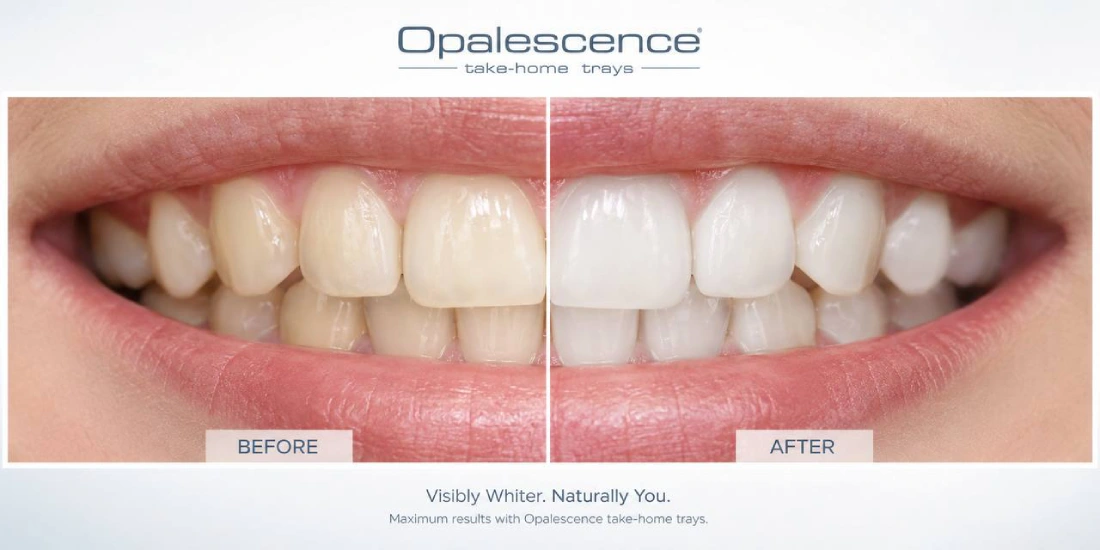
Opalescence is another comfortable teeth whitening system designed for mild discoloration. It is suitable for maintaining a brighter enamel shade and can be especially useful for age-related changes and preventing yellowing caused by food pigments.
The Opalescence system also uses custom-made whitening trays designed specifically for you. The active ingredient (carbamide peroxide) is gradually released and gently works on stain molecules. The trays can be worn for short periods (starting from 15 minutes) or used overnight, depending on the recommended protocol.
How Is the KoR System Different from Opalescence?
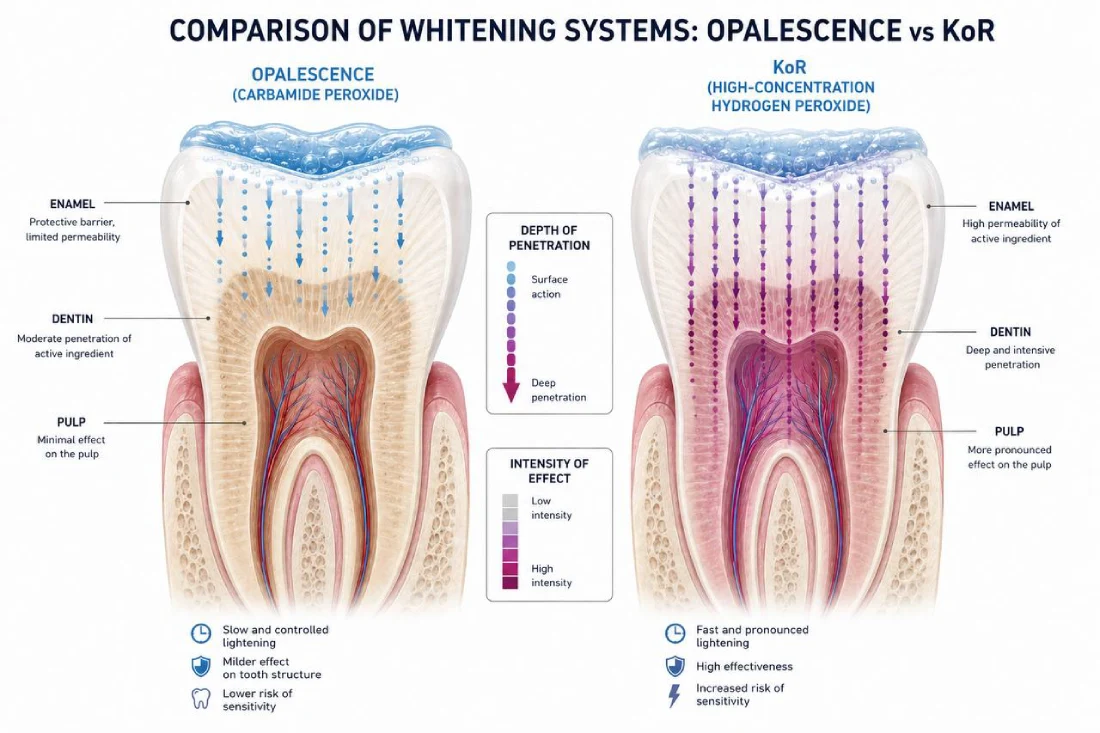
KoR
Active Ingredient – high-concentration hydrogen peroxide (14–34%)
Under dental supervision, it actively lightens even stubborn tetracycline stains.
A structured treatment protocol with tray use for up to 4 weeks
Opalescence
Whitens enamel through slow-release carbamide peroxide
Helps improve mild age-related and food-related discoloration. Works more gently and does not require in-office supervision.
A flexible whitening approach without strict limitations on wear time or treatment duration
Combining Take-Home with In-Office Whitening for Faster Results
To improve and speed up your whitening results, schedule a professional dental cleaning before starting treatment. Removing surface stains and buildup reveals your natural tooth shade and helps your dentist choose the most appropriate whitening approach. It is also recommended to check the condition of existing fillings and treat any active cavities before whitening.
Tips for Maintaining Your Whitening Results
To maintain your whitening results for as long as possible, follow these simple recommendations:
After a professional cleaning or whitening procedure, avoid staining foods and beverages for at least 48 hours.
Maintain good oral hygiene. Brush your teeth thoroughly at least twice a day using a toothbrush and toothpaste.
Every 3–6 months, use your whitening trays with gel for a short maintenance course of 2–4 days, as recommended by your dentist.
In some severe cases, enamel discoloration may not respond to whitening. If teeth are significantly damaged, whitening may not be recommended. In these situations, alternatives such as veneers or bonding may be considered. These treatments can improve not only tooth color but also shape and texture.
FAQ
How long does take-home teeth whitening take to work?
Results are typically achieved within 2–4 weeks, depending on the whitening system used and the initial condition of your teeth.
Is KoR whitening safe for sensitive teeth?
Yes. KoR is suitable for many patients with sensitive teeth due to its refrigerated gel technology and custom-selected concentration.
What's the difference between KoR and Opalescence?
KoR is designed for deeper and more intensive whitening of complex discoloration, while Opalescence provides a gentler and more gradual whitening approach.
Can I whiten my teeth at home if I have crowns or veneers?
Yes, but whitening gel does not change the color of crowns or veneers. It only affects natural tooth structure.
How long do whitening results last?
Results can last from 1 to 5 years with proper maintenance and by following your dentist’s recommendations.
Does dental insurance cover take-home whitening kits?
In most cases, no. Teeth whitening is generally considered a cosmetic procedure and is not covered by dental insurance.