


Clinically reviewed by
Dr. Boris Lipovetskiy, DMD
If your teeth look small in photos or your upper gums show more than you expected when you smile, you may be noticing what dentists call a gummy smile.
A gummy smile, also called excessive gingival display, means more gum tissue than usual is visible above the upper teeth during a full smile. For many people, it is mainly an aesthetic concern. In other cases, swollen or overgrown gum tissue can make the gumline harder to clean or point to an underlying dental issue.
A gummy smile is usually about the balance between teeth, gums, lips, and facial proportions.
Common causes include extra gum coverage, a high-moving upper lip, tooth position, bite changes, jaw development, or gum inflammation.
Treatment depends on the cause, so a dentist should examine the gumline, tooth shape, bite, bone level, and lip movement before recommending a procedure.
What Is a Gummy Smile?
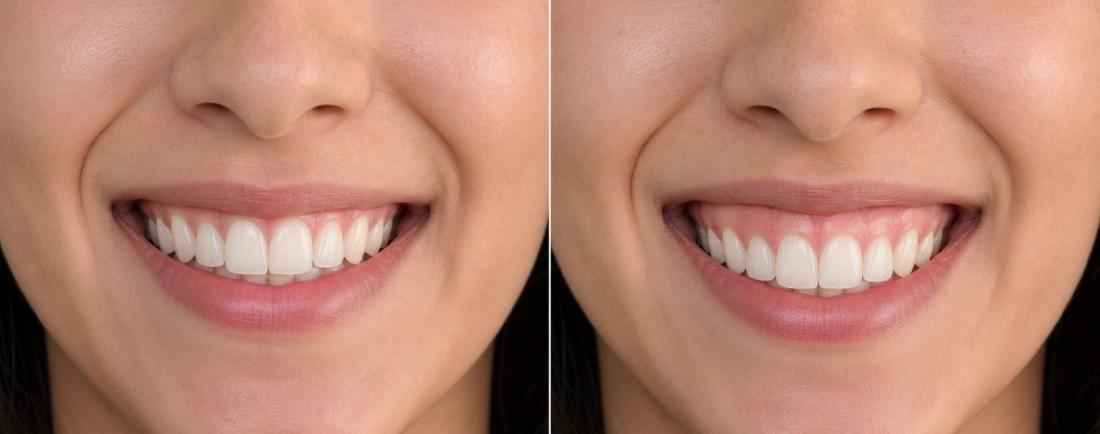
A gummy smile shows more upper gum tissue than expected when the person smiles fully. Dentists may describe this as excessive gingival display.
There is no single number that applies to every face. Some clinicians use more than 2 mm of visible gum as a starting point, while others consider 3 to 4 mm more meaningful in practice. The measurement matters, but it is not the whole diagnosis. Tooth size, lip movement, facial proportions, gum health, and the patient's own comfort with the smile all matter.
A gummy smile is not automatically a medical problem. If the gums are healthy, cleaning is easy, the bite is stable, and the person likes their smile, treatment may not be needed.
How Much Gum Is Too Much?
The 2 mm gum threshold gives dentists a baseline for measuring the smile. If a full smile shows more than 2 mm of gum above the upper teeth, the smile is often recorded as gummy; some clinicians set the practical cutoff closer to 3–4 mm. Published estimates commonly place this pattern at about 10–14% of people.
The measurement has to be read in the context of the rest of the exam. A patient can show 3–4 mm of gum while the tissue is firm, the teeth are stable, and function is normal. Correction is considered when the display bothers the patient or when overgrown tissue, swelling, wear, or bite changes interfere with hygiene, comfort, or chewing.
What Causes a Gummy Smile?
A gummy smile can have several causes, and more than one cause can be present at the same time. This is why the same-looking gum display can require very different treatment plans.
1. Teeth covered by extra gum tissue
Some teeth look short because gum tissue covers more enamel than expected. Dentists may call this altered passive eruption when the gum margin does not move to its expected position after the tooth erupts.
2. High lip line or hypermobile upper lip
A high-moving upper lip can reveal more gum even when the teeth and gum tissue are healthy. The lip may rise more than average during a full smile, exposing a broader band of gum above the upper teeth.
3. Bite, tooth wear, or jaw development
The bite can change how much gum appears in the smile. A deep bite, worn front teeth, or tooth movement can make the upper teeth and gumline look lower in the smile frame.
4. Gum overgrowth or inflammation
Gum tissue can appear larger when it is inflamed, swollen, or overgrown. Plaque buildup, gum disease, and some medications may contribute to gum enlargement.
5. Genetics and facial proportions
Some people inherit a combination of features that makes gum display more noticeable. This does not mean a gummy smile is caused by one "gummy smile gene." It means facial and dental proportions can run in families.
What Are Typical Signs of a Gummy Smile?
The most common sign of a gummy smile is a visible band of upper gum tissue during a full smile. Patients often notice it first in photos or videos.
Teeth that look short or small compared with the amount of gum shown.
An uneven gumline around neighboring teeth.
Upper gums that dominate the smile more than the teeth.
Difficulty cleaning around thick, swollen, or overgrown gum tissue.
Gum bleeding or irritation when the issue is related to inflammation.
Avoiding a full smile in photos or conversation.
When Should You See a Dentist?
You should see a dentist if the gum display bothers you, changes over time, or comes with bleeding, swelling, tooth wear, bite changes, or cleaning difficulty.
- The gums bleed or stay swollen.
- Gum tissue seems to be covering more of the teeth than before.
- The teeth look shorter than they used to.
- The bite feels different or front teeth show signs of wear.
- Food and plaque collect around the gumline.
- The smile concern affects confidence in photos, work, or social settings.

How Do Dentists Decide Which Treatment Fits?
Dentists choose gummy smile treatment by diagnosing the cause first. The right treatment depends on whether the issue comes from gum tissue, bone level, tooth position, lip movement, inflammation, or facial proportions.
Smile photos at rest, speech, and full smile.
Gum measurements around the upper teeth.
Evaluation of tooth length and enamel visibility.
Bite and tooth-wear assessment.
Lip movement assessment.
X-rays, digital scans, or other imaging when bone level or jaw position needs to be checked.
What Treatment Options May Help?
Treatment may help when the gum display bothers the patient or when excess, swollen, or uneven gum tissue affects hygiene and oral health. The best option depends on the cause.
Gum contouring or laser reshaping
May fit mild soft-tissue excess or uneven gum margins when the bone level and tooth anatomy allow it. Gum contouring and laser procedures should be selected case by case.
Crown lengthening
May be considered when enamel is hidden under gum tissue and a stable gumline requires more than simple reshaping.
Invisalign or clear aligners
May help when tooth position or bite relationship contributes to gum display. Invisalign is not for every case, but it can fit selected bite-related plans.
Veneers or crowns
May improve tooth proportions after the gumline and bite have been evaluated. Veneers do not correct every cause of a gummy smile.

Dr. Boris Lipovetskiy’s, DMD, Approach to Gummy Smile Treatment
Dr. Boris Lipovetskiy, DMD evaluates a gummy smile by looking for the reason the gum display appears, not by choosing a procedure first. With more than 33 years of clinical dental experience, he reviews tooth proportions, gum levels, enamel visibility, lip movement, bite relationship, wear patterns, and the patient's cosmetic goals.
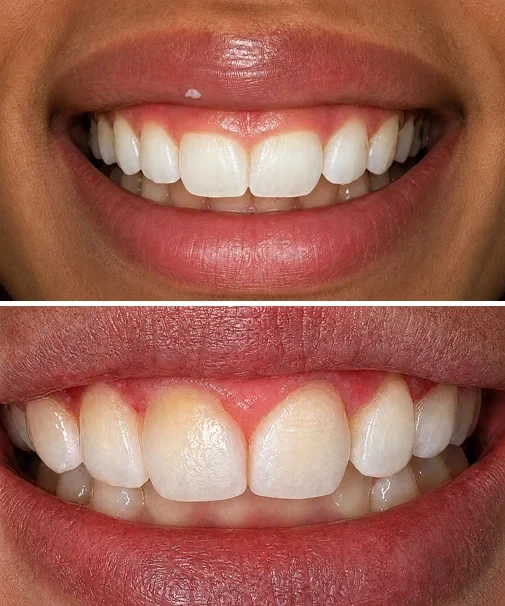
My cosmetic dentistry smile design process turns those measurements into a sequence of care. If covered enamel is the main issue and the bone position provides enough room, laser reshaping may be suitable. If the bone is close to the enamel, crown lengthening with bone correction may provide a more stable margin.
Aligners are considered when tooth position contributes; veneers are considered only after the gum line and bite have been accounted for and tooth proportion still needs refinement.
FAQ
Can a gummy smile fix itself over time?
Usually, no. Jaw position, tooth eruption pattern, gum margins, and lip movement usually do not change enough on their own to correct a gummy smile. If the gums look larger because they are inflamed, professional cleaning and better daily care may reduce swelling.
Is a gummy smile a medical or cosmetic condition?
It is often cosmetic when the gums are healthy and the concern is only appearance. It becomes a dental concern when gum tissue bleeds, stays swollen, traps plaque, covers more enamel, or makes the gumline difficult to clean.
Can exercises or home remedies help?
No home exercise can move the jaw, uncover enamel hidden by gum tissue, or correct tooth position. Good brushing and flossing can reduce inflammation-related swelling, but they cannot change lip movement, jaw proportions, altered eruption, or bite structure.
Does a gummy smile get worse with age?
Not always. Some adults show less upper gum over time because the upper lip changes with age. Gum display can still increase if inflammation, medication-related overgrowth, tooth wear, or bite changes alter the relationship between teeth and gums.