


Clinically reviewed by
Dr. Boris Lipovetskiy, DMD
If you just had a tooth prepared for a crown, the cover you feel now is a temporary dental crown. It is normal, temporary, and important: it protects your tooth while your permanent crown is being made.
A temporary crown, also called a provisional crown, helps reduce sensitivity, keeps the bite space stable, and lets you chew and speak more comfortably during the waiting period.
Most temporary crowns stay on for about two to three weeks.
Avoid sticky, hard, crunchy, and very chewy foods.
Call ADW Center if the crown feels loose, painful, too high, or falls off.
Why Do Dentists Place a Temporary Crown?
Dentists place temporary crowns to protect a prepared tooth until the final crown, bridge, or implant crown is ready. In most cases, a temporary crown is not a sign that something went wrong. It is a planned step between tooth preparation and the final restoration.
A dentist may place a temporary crown:
After a tooth is prepared for a crown. The tooth has been reshaped, so it needs protection from temperature, pressure, food debris, and bacteria while the final crown is made.
During dental bridge treatment. Temporary crowns can protect the prepared teeth that will support the bridge and help maintain the planned bite relationship.
During some implant crown cases. A temporary crown may help shape the gum tissue and protect the area before the final implant crown is placed.
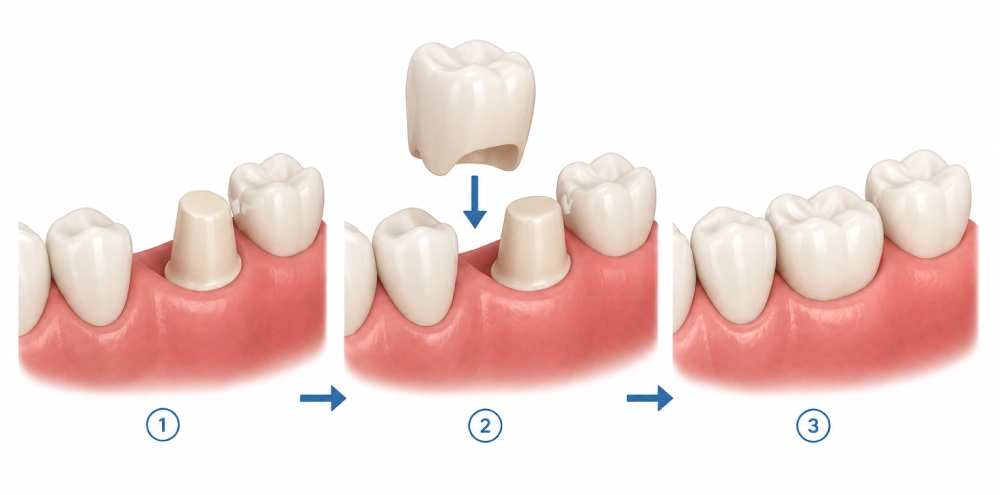
What Happens When a Temporary Crown Is Placed?
A temporary crown appointment usually includes preparing the tooth, taking a scan or impression, seating the temporary crown, and checking your bite. The exact steps depend on your tooth, bite, and treatment plan.
- The dentist reshapes the tooth so the final crown can fit securely and seal properly around the edges. When clinically appropriate, ADW Center may use technologies such as WaterLase to support patient comfort and conservative tooth preparation.
- A scan or impression records the shape of your teeth and bite. ADW Center uses iTero digital scanning, which avoids traditional putty impressions and helps the team plan the temporary and final crown with more detail.
- The temporary crown is shaped, seated, and adjusted so it feels comfortable when you close your mouth. It is held in place with temporary cement. Before you leave, the dentist checks the bite so the crown does not hit too early or feel too high.
- When the final crown is ready, the temporary crown is removed. The dentist checks the fit, bite, shape, and appearance of the permanent crown before bonding it in place.
How Long Does a Temporary Crown Last?
Most temporary crowns stay in place for about two to three weeks while the final crown is being made. Your timeline may be longer if the treatment involves implants, gum healing, or a more complex restoration.
A temporary crown should last until your scheduled final crown visit, but it is not built for long-term chewing. The material and cement are intentionally different from a permanent crown. They are strong enough for short-term protection, but they are not meant to function for months.
Do not extend the temporary phase without checking with your dentist. Wearing a temporary crown too long can increase the risk of leakage, decay, gum irritation, shifting, or damage to the temporary material.
What Is the Difference Between a Temporary Crown and a Permanent Crown?
A temporary crown is short-term protection. A permanent crown is the final restoration designed for long-term function, fit, and appearance.
Temporary crown
Protects the tooth for a short period.
Is usually made from acrylic, resin, or composite.
Is held with temporary cement.
Is easier for the dentist to remove.
Needs careful eating and flossing.
Permanent crown
Restores the tooth for long-term use.
Is often made from ceramic materials such as zirconia or E.max.
Is bonded with stronger final cement.
Is designed for daily chewing over years.
Is maintained like a final dental restoration.
How to Care for Your Temporary Crown
Care for a temporary crown by avoiding sticky or hard foods, keeping the gumline clean, and calling your dentist if the crown feels loose or painful.
When can you eat after a temporary crown is placed?
Many patients can eat after the temporary cement has had time to set and normal feeling has returned. This is often about 30 to 60 minutes, but follow the specific timing your dentist gives you.
If you had local anesthesia, do not eat until numbness is gone. Numbness makes it easier to bite your cheek, lip, or tongue without realizing it.
What foods should you avoid with a temporary crown?
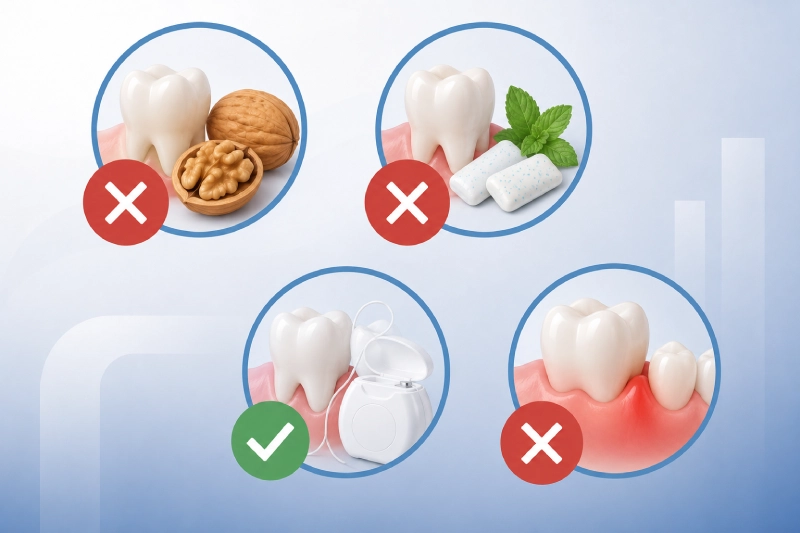
Avoid foods that are sticky, hard, crunchy, or very chewy. These foods can pull at the crown, crack the temporary material, or loosen the temporary cement.
Gum, caramel, taffy, toffee, and sticky candy.
Hard candy, ice, nuts, popcorn kernels, and very crunchy snacks.
Crusty bread, tough meat, chewy bagels, and foods that require tearing.
Biting directly into apples, corn on the cob, or hard sandwiches with the crowned tooth.
How should you brush around a temporary crown?
Brush gently around a temporary crown with a soft-bristled toothbrush. Keep the gumline clean, but do not scrub aggressively around the crown edge.
How should you floss around a temporary crown?
Floss around a temporary crown by sliding the floss out from the side instead of pulling it straight up. Pulling upward can catch under the temporary crown and loosen it.
What Should Feel Normal, and When Should You Call?
Mild sensitivity or gum tenderness can be normal for a short time after a temporary crown is placed. The crown should not feel loose, unstable, or painful when you bite.
Call ADW Center if:
The crown feels loose or moves.
The crown falls off.
Your bite feels high or uneven.
Pain gets stronger instead of improving.
Sensitivity is sharp, throbbing, or does not settle.
The gum becomes increasingly swollen or irritated.
The tooth feels exposed or rough because the crown is missing.
FAQ
Can I eat normally while eating with temporary crown?
Not completely. You can eat, but you should avoid sticky, hard, crunchy, and very chewy foods. Chew on the opposite side when possible and cut food into smaller pieces.
Is temporary crown sensitivity normal?
Mild sensitivity can happen after tooth preparation and temporary crown placement. It should gradually improve. Call your dentist if the sensitivity is sharp, throbbing, worsening, or triggered every time you bite.
What is the difference between a temporary crown and a provisional crown?
There is usually no practical difference for patients. "Provisional crown" is the clinical term dentists may use for a temporary crown.