

Clinically reviewed by
Dr. Boris Lipovetskiy, DMD
Gently run your tongue along the edge of your gums for a moment. Can you detect a patch that feels different—perhaps uneven, puffy, or sensitive? After cleaning between your teeth, have you ever noticed a slight pink trace on the floss? In my work as a periodontist at ADW Center, I often meet people who have paid little attention to these subtle changes. Even slight changes in the way your gums look or feel may indicate that inflammation or infection is already developing.
This guide explains when to see a periodontist, how periodontal treatment differs from routine dental care, and why gum health affects much more than the appearance of your smile.
Dentist or Periodontist?
Routine gum care, including treatment for early gingivitis, is typically provided by a general dentist. Care from a periodontist is usually recommended if the disease reaches deeper supporting tissues, affects the jawbone around the teeth, or leads to gum recession. Periodontists receive advanced specialty training focused on diagnosing and treating conditions affecting the gums, supporting bone, and connective tissues around the teeth.
Their specialist preparation covers:
Detailed assessment of periodontal health through 3D CBCT imaging and periodontal charting;
Periodontal surgery aimed at controlling disease and restoring damaged tissues;
Waterlase-based laser gum treatment supported by ozone therapy;
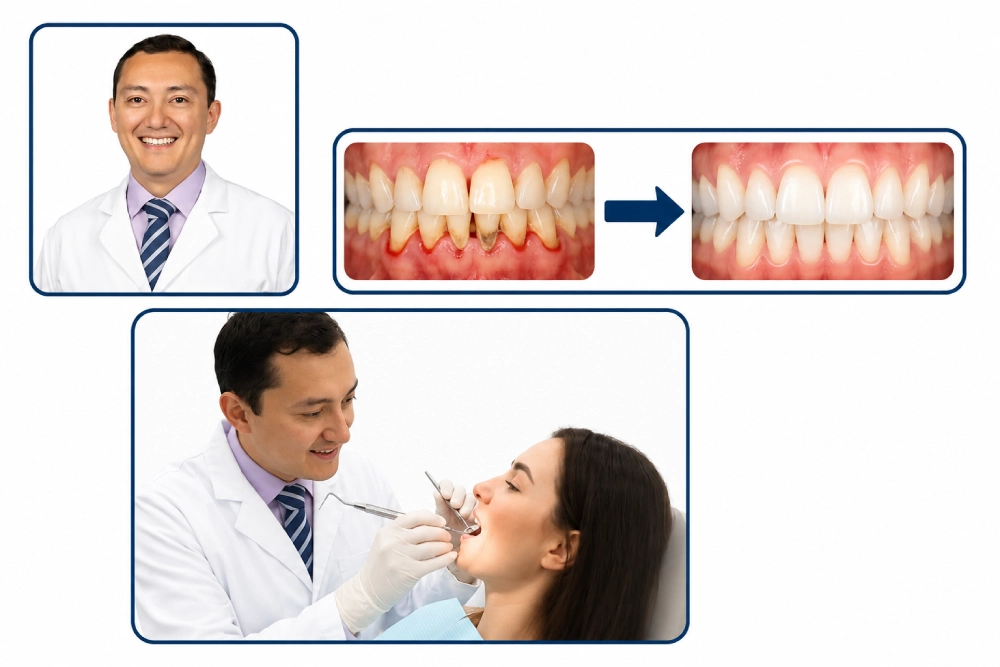
7 Signs You May Need Periodontal Care
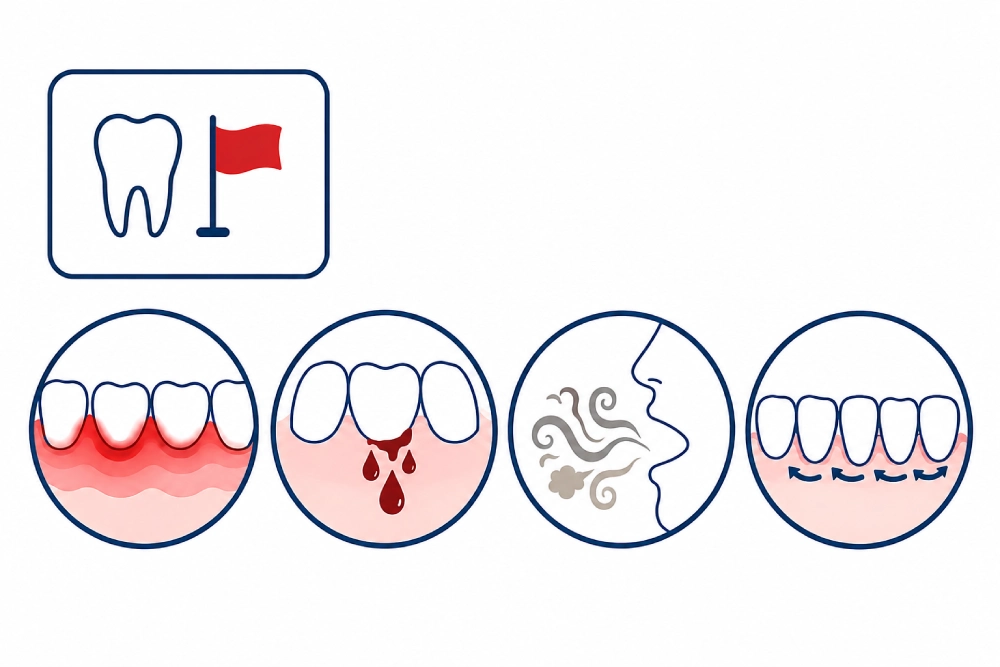
- Bleeding when brushing or flossing. Seeing blood after brushing or flossing is usually a sign that something is not right. This type of bleeding is commonly linked to bacterial infection and inflammation developing within the periodontal pockets. If left untreated, the infection can continue to advance beneath the gums and slowly break down the structures that keep your teeth firmly in place.
- Red, swollen, or tender gums. Healthy gum tissue is usually firm to the touch and light pink in color. Swelling, redness, or tenderness often reflects your body’s ongoing attempt to fight bacteria that remain active beneath the gums. When inflammation persists over time, it can gradually destroy the bone that supports your teeth.
- Persistent bad breath (halitosis). Breath odor that keeps returning is often caused by more than routine oral hygiene issues. Harmful bacteria hidden inside periodontal pockets produce sulfur compounds responsible for the lingering smell. Mouthwash may briefly improve breath freshness, but it does not eliminate the bacteria located below the gumline where the odor originates.
- Receding gums (“longer-looking” teeth). As gum tissue recedes, the roots become increasingly exposed, creating the appearance of longer teeth. Root exposure affects more than appearance – it commonly increases tooth sensitivity and raises the likelihood of additional periodontal damage that may eventually result in tooth loss.
- New gaps between teeth or “black triangles”. Progressive periodontal disease can damage the tissues between neighboring teeth, causing the gum papilla to shrink over time. As this tissue is lost, black triangles or wider spaces may appear, and neighboring teeth may gradually shift out of position. These are important warning signs that supporting structures have already been affected and should be assessed by a periodontist promptly.
- Loose or shifting teeth. Permanent teeth should remain stable throughout adulthood. If they begin to move or feel loose, the surrounding bone and supporting tissues have likely been seriously damaged. Without periodontal treatment, saving the tooth may no longer be possible, and replacement with a dental implant may become necessary.
- Pus or an unpleasant taste in your mouth. Pus around the gums or a persistent unpleasant taste often indicates an active periodontal infection. Besides damaging the tissues surrounding your teeth, the infection may also affect your overall health. Prompt evaluation by a periodontist is the best way to prevent the condition from progressing.
Why Gum Health Is About More Than Your Mouth?
At ADW Center, we approach periodontal care through the principles of biological, holistic dentistry. From this perspective, periodontitis is not limited to the gumline; it is a long-term inflammatory condition that may affect health beyond the mouth.
Scientists have identified more than 700 bacterial species in the oral cavity. Periodontitis can weaken the protective seal created by healthy gums, giving aggressive microorganisms a route into the bloodstream. The bacteria most strongly associated with advanced disease include the “red complex” species P. gingivalis, T. forsythia, and T. denticola. After crossing the damaged gum barrier, these pathogens may promote inflammatory responses in other parts of the body. Studies have connected periodontal disease with cardiovascular problems, diabetes-related complications, and other systemic conditions.
The “painless disease” paradox. Periodontitis is especially difficult to detect because noticeable pain may not appear until the teeth have already started to loosen. Meanwhile, bone can continue deteriorating without obvious symptoms. The absence of discomfort therefore does not confirm that the gums are healthy; it may be a reason to arrange a periodontal evaluation.
Our periodontist at ADW Center looks beyond the visible inflammation and considers factors that could affect recovery. When a patient intends to replace older amalgam fillings, we apply the IAOMT Safe Mercury Amalgam Removal Technique (SMART) protocol whenever the clinical situation calls for it. This is part of our biological approach: addressing infection, limiting avoidable strain on the body, and choosing biocompatible materials where possible.

"Throughout my career, I've seen untreated gum disease affect patients far beyond their smiles. We're not just treating teeth—we're caring for the entire biological system of the mouth."
What to Expect at Your First Periodontal Visit?
Periodontal treatment is never exactly the same from one patient to another, so every care plan is customized to individual needs. Your first appointment begins with a consultation with Dr. Lipovetskiy or our lead periodontist, Dr. Porras. During this visit, we’ll review your examination results, explain the recommended treatment, and make sure you understand each step before moving forward.
Comprehensive periodontal evaluation
Your evaluation includes a thorough examination of the gums, teeth, and supporting bone to determine how advanced the disease is and which treatment approach is most appropriate. We use 3D cone beam CT imaging to assess bone density, intraoral cameras to examine areas that are difficult to see with the naked eye, and the iTero digital scanner to capture a precise 3D digital model of your teeth without using traditional impression material.
Scaling & Root Planing
Scaling & Root Planing is the primary non-surgical treatment for periodontal disease. The procedure removes plaque, hardened tartar, and bacterial biofilm from beneath the gumline before carefully smoothing the root surfaces. By reducing the bacterial load, it helps control inflammation and creates favorable conditions for the surrounding tissues to heal.
Waterlase laser gum treatment
Waterlase delivers laser energy directly to infected areas and periodontal pockets while leaving neighboring healthy tissue largely undisturbed. Compared with conventional gum surgery, this method is typically associated with less bleeding, milder discomfort afterward, and a more manageable recovery. Its minimally invasive nature can also make treatment easier for patients with dental anxiety. In fact, 95% of our patients rate their discomfort during Waterlase treatment as only 1 out of 10.
Ozone therapy for gum disease
Ozone may be incorporated into periodontal care for its antimicrobial action. It helps decrease the concentration of harmful microorganisms inside periodontal pockets and creates conditions that support healing. However, ozone is used as an adjunct and cannot replace professional deep cleaning or antibiotics when either is medically indicated. Our objective is to remove up to 99.9% of harmful pathogens while keeping the overall burden on the body as low as possible.
Gum grafting and recession correction
When recession exposes part of the tooth root, a periodontist may recommend a gum graft to restore coverage and rebuild the missing tissue. This can improve the contour of the gumline, protect sensitive root surfaces, and help maintain periodontal stability over time.
FAQ
Can my regular dentist treat gum disease, or do I need a periodontist?
A general dentist can effectively prevent and treat gingivitis, the earliest stage of gum disease. However, if the infection has spread to the supporting bone or you’ve developed gum recession, it may be time to schedule a periodontal exam with a periodontist. At ADW Center, you don’t need a referral or an outside specialist. Our multidisciplinary team includes Dr. Lipovetskiy, who provides comprehensive holistic dental care, and Dr. Porras, our board-certified periodontist.
Is gum disease treatment painful?
Many patients are concerned about discomfort, and we understand why. That’s why we use modern technology designed to make treatment as gentle as possible. With the Waterlase laser, 95% of our patients report discomfort of only 1 out of 10. Because laser therapy often eliminates the need for scalpels and stitches, recovery is usually faster and more comfortable.
How many Scaling & Root Planing appointments will I need?
Most patients complete Scaling & Root Planing in two appointments. We generally treat one side of the mouth during each visit to maximize comfort while ensuring every periodontal pocket receives a thorough cleaning.
Is laser gum treatment really better than traditional surgery?
For many patients, it is. Our doctors frequently recommend the Waterlase laser because it precisely removes infected tissue while preserving healthy gums, minimizes bleeding, often eliminates the need for sutures, and typically allows for a much quicker recovery than conventional periodontal surgery.
Can gum disease affect my overall health?
Yes. Periodontitis can contribute to chronic inflammation throughout the body. Research suggests that bacteria from infected periodontal pockets may increase the risk of cardiovascular disease, diabetes-related complications, Alzheimer’s disease, and certain men’s health conditions, including an increased risk of erectile dysfunction. Treating gum disease isn’t only about protecting your teeth—it’s also an important part of protecting your overall health.
Does ADW Center accept insurance for periodontal treatment?
Yes. We work with most PPO insurance plans, and our team will verify your benefits before treatment starts. We also offer 0% financing through CareCredit and LendingPoint to help make periodontal care more affordable.
Ready to Take Care of Your Gum Health?
At ADW Center, Dr. Lipovetskiy evaluates the health of your gums during every comprehensive dental exam – no referral is required. If specialized periodontal care is needed, our periodontist will work to stop the infection as early as possible and help protect both your smile and your overall health.
- PPO insurance accepted
- 0% financing available
- Convenient Downtown Fort Lauderdale location