


Clinically reviewed by
Dr. Boris Lipovetskiy, DMD
Many people avoid whitening because they worry about enamel damage or tooth sensitivity. Others overuse strips, gels, or abrasive products without knowing whether those methods are appropriate for their teeth.
The good news is that you do not necessarily have to choose between a brighter smile and healthy enamel. The key is choosing the right whitening method, concentration, and exposure time for the condition of your teeth.
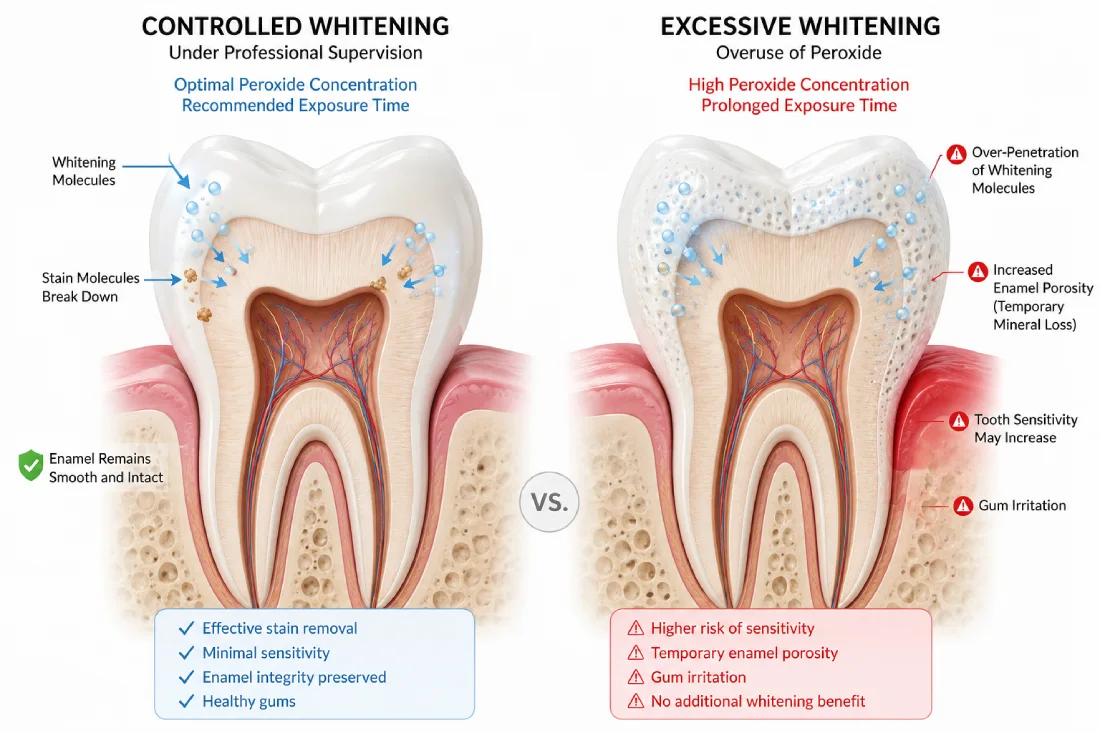
Temporary tooth sensitivity is the most common side effect of teeth whitening. How likely it is to occur depends on the whitening method, peroxide concentration, treatment time, and individual sensitivity.
What Can Damage Enamel During Teeth Whitening?
Overusing Peroxide or Extending Treatment Time
Hydrogen peroxide and carbamide peroxide break down compounds that contribute to tooth discoloration. Higher concentrations may shorten treatment time, but they can also increase the risk or intensity of tooth sensitivity. More peroxide or longer exposure does not automatically mean a better result.
The safest approach is to match the concentration and exposure time to the whitening system, the type of discoloration, and the patient's individual sensitivity.
Why an OTC Whitening Product May Not Be Right for Every Patient
The OTC (Over‑the‑Counter) label means the product is considered safe for most healthy people when used as directed. It does not take into account the condition of your specific teeth and gums.
If you have tooth sensitivity, untreated cavities, exposed roots, or gum disease, whitening may cause additional discomfort or irritation. A dental examination can help identify problems that should be addressed before treatment begins.
That's why it's recommended to have an exam by a qualified dentist before whitening. They can spot hidden oral issues you didn't know about and prescribe a safe protocol for you.
The Difference Between Extrinsic and Intrinsic Stains
Understanding what’s causing your tooth discoloration is key to choosing a method that actually works.
Extrinsic stains sit on the surface. They usually come from coffee, tea, red wine, smoking, or highly pigmented foods.
Intrinsic discoloration goes deeper - inside the tooth. It can result from tetracycline use, fluorosis, trauma, previous root canal treatment, or simply aging dentin.
If you misidentify the type of staining, even an expensive whitening system may not deliver the results you expect. That’s why a dental exam is the smart first step before any whitening procedure.
Which Teeth Whitening Method Is Safest for Enamel?
| Method | How it works | Best suited for | Main safety considerations |
|---|---|---|---|
| Whitening toothpaste | Primarily removes surface stains through polishing or mild abrasives | Mild extrinsic staining | Excessively abrasive products may contribute to tooth wear over time |
| Whitening strips | Apply peroxide gel directly to the front surfaces of teeth | Mild to moderate discoloration | Overuse may cause temporary sensitivity or gum irritation |
| Use dentist-selected whitening gel in trays fitted to the teeth | Patients who want controlled at-home whitening | Concentration and wear time can be selected according to sensitivity and treatment goals | |
| Uses a clinician-controlled whitening protocol for faster treatment | Patients seeking faster treatment or professional supervision | Sensitivity may still occur; soft tissues and exposure time are controlled during treatment |
Whitening Systems We Use at ADW Center
At ADW Center, we do not simply choose the strongest available whitening product. The dentist considers the cause of discoloration, current tooth sensitivity, existing restorations, and treatment goals before recommending a whitening system. For more challenging discoloration, including certain cases of tetracycline staining and fluorosis, KöR Whitening may be considered. KöR uses continuously refrigerated whitening gels, which the manufacturer designed to help preserve gel potency during storage and delivery. Opalescence offers dentist-directed take-home whitening options in multiple strengths, allowing the treatment schedule and gel concentration to be selected according to the patient's needs and sensitivity.
Tips to Protect Your Enamel While Whitening
Following these simple steps can help you achieve safer teeth whitening results:
Schedule a professional cleaning and dental examination before starting your whitening treatment.
Choose the lowest effective concentration of whitening gel.
Follow the recommended intervals between whitening treatments.
Stop the treatment and consult your dentist if sensitivity becomes severe or does not improve after completing the course.
Follow your dentist's instructions about highly pigmented foods and drinks during and after whitening. Recommendations may vary depending on the whitening system and treatment protocol.
When Whitening Won't Help
Not all types of tooth discoloration respond to whitening treatments. Deep internal discoloration caused by tetracycline, fluorosis, or dental trauma often does not respond well to standard whitening treatments. In these cases, options such as KoR Whitening or dental veneers may be recommended.
It is important to remember that crowns, dental veneers, and dental bonding materials do not whiten. Their color remains unchanged regardless of the whitening system used. If your natural teeth become lighter after whitening, existing restorations may become more noticeable and may need to be replaced to achieve a more uniform appearance.
FAQ
How often can teeth whitening be performed without damaging enamel?
It depends on the whitening method, peroxide concentration, and the condition and sensitivity of your enamel. Repeat whitening treatments should only be performed according to your dentist’s recommendations, with sufficient time between treatments to allow your teeth to recover.
Is hydrogen peroxide safe for teeth?
Hydrogen peroxide is widely used in teeth whitening and is generally considered safe when an appropriate product is used as directed. However, temporary tooth sensitivity and gum irritation can occur, and overuse or excessive exposure should be avoided.
Does professional whitening damage enamel more than OTC whitening?
Not necessarily. In-office whitening may use higher peroxide concentrations, but the gel is applied with controlled exposure time and protection of the surrounding soft tissues. Temporary sensitivity can still occur and may be more noticeable with some in-office protocols. The safest option depends on the condition of your teeth, the product used, and how closely the instructions are followed.
Can I whiten my teeth if they are sensitive?
Possibly, but the cause of sensitivity should be considered first. Cavities, exposed root surfaces, enamel erosion, cracks, and other dental conditions may contribute to sensitivity and should be evaluated before whitening. A dentist may recommend a lower concentration, shorter wear time, or another protocol depending on the individual case.