

Clinically reviewed by
Dr. Boris Lipovetskiy, DMD
A single dark tooth, new chewing pain, a recurring bad taste, or soreness in the nearby gum is enough reason for an exam. Together, these changes can suggest that the pulp has lost vitality.
Dr. Boris Lipovetskiy, who has more than 33 years of clinical experience, explains how ADW evaluates a suspected dead tooth, when observation may be appropriate, and when treatment should focus on infection control or tooth replacement.
What Is a Dead Tooth?
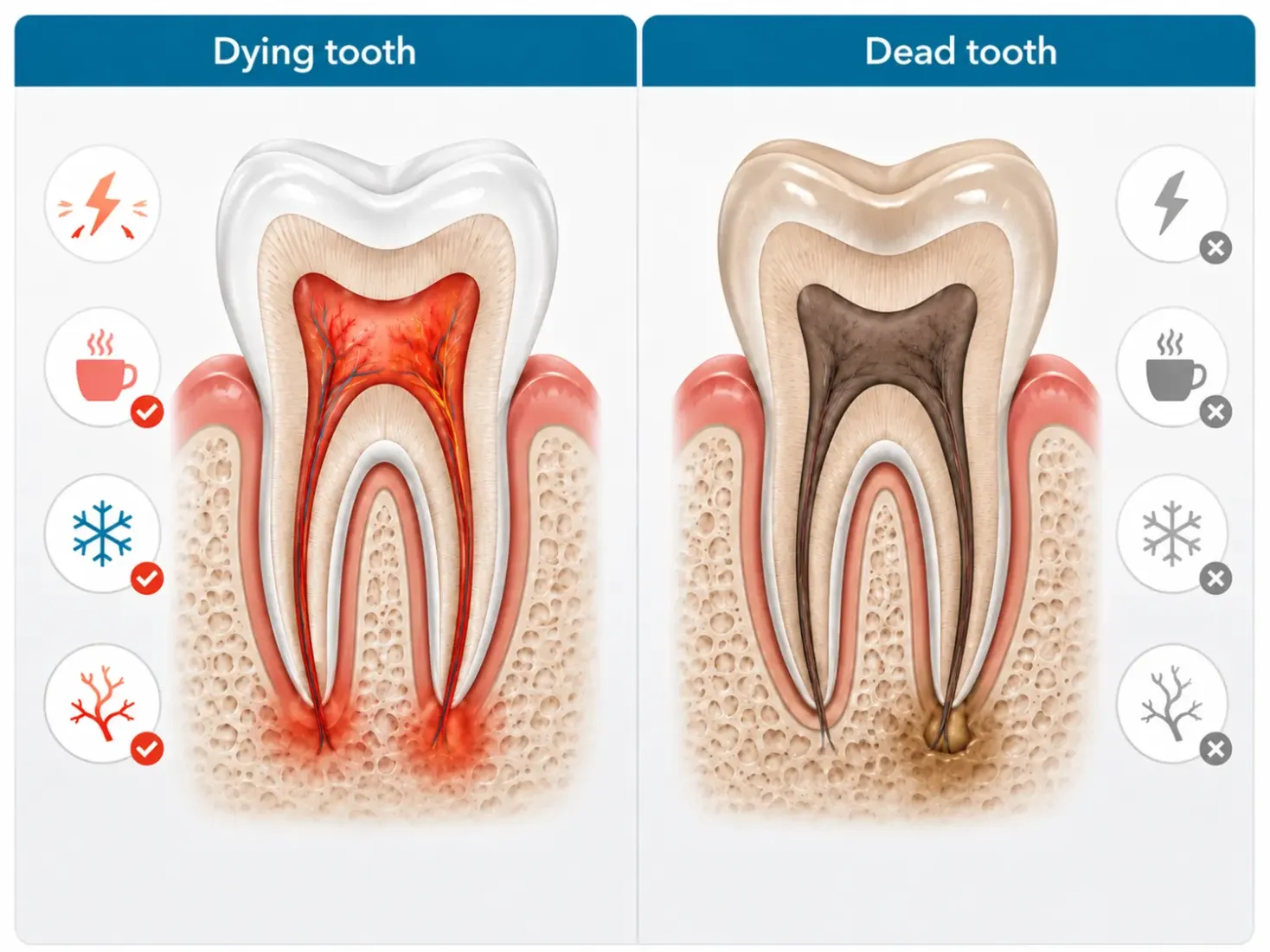
In clinical wording, a dead tooth refers to a tooth whose pulp is no longer living. This pulp tissue runs through the crown and root canals. It carries nerve endings, small blood vessels, and connective fibers. After vitality is lost, the tooth can darken, stop responding normally to cold, or hurt mainly under bite pressure. Pain may fade, but inflammation near the root can remain active. If the pulp damage cannot recover, the clinical term is necrotic tooth.
A dying tooth may still react to cold, heat, or pressure because part of the nerve supply continues to function. Pain is therefore still common.
A dead tooth can stay in the jaw for a long time with little or no pain, even as inflammation around the root continues to progress.
Symptoms are clues, not a diagnosis. The dentist still needs in-office tests and imaging to confirm the pulp status.
Why Does a Tooth Die?
The pulp is trapped inside hard dental walls. When it becomes inflamed, swelling cannot spread outward. Pressure rises inside the tooth, tiny vessels are compressed, and the pulp loses oxygen and nutrients. Dentists describe this process as pulp necrosis or tooth pulp death. After this happens, the tooth is classified as a non-vital tooth.
Dead Tooth After Trauma
A hit to the tooth may leave the enamel looking intact. The hidden injury can involve the small vessels entering through the root, which normally supply the pulp. If that blood flow weakens, the pulp may lose vitality slowly. A dead tooth after trauma can therefore look normal at first and darken later.
When a Tooth Dies Because of Decay
Decay starts when bacterial acids pull minerals out of enamel. If the cavity moves deeper, it passes through dentin and reaches the pulp chamber. Once bacteria enter the pulp, inflammation develops in a space that cannot stretch. Pressure rises, blood flow drops, and the tissue can become necrotic.
When the pulp still has recovery potential, ADW may choose conservative care. Dental ozone therapy for teeth can be included because ozone is used to reduce bacterial activity in the treated area. Once necrosis is confirmed, the decision changes. The dentist reassesses whether the tooth can be treated predictably or whether replacement would better protect the surrounding bone and tissues.
When Overload or Bruxism Leads to Tooth Death
Repeated mechanical load can also affect the pulp. The source may be an uneven bite, bruxism, night grinding, heavy clenching, or a crown or filling that touches before the rest of the teeth.
Each overload episode carries force through the crown and root. The pulp may first become irritated and then inflamed. If the pressure pattern continues, the small vessels inside the tooth may stop supplying the tissue properly.
For bruxism, ADW may recommend a night guard that keeps the teeth apart during sleep. This helps because nighttime clenching is not under conscious control.
Sports protection works differently. A sports mouth guard is thicker and designed to absorb impact. A night guard is not made for collisions, so the dentist chooses the appliance by the type of load.
Dead Tooth Symptoms: What to Watch For
A tooth that darkens, hurts during chewing, gives a recurring bad taste, or forms a small gum bump should be checked if the sign does not go away. Dead tooth symptoms are often mild. Once the nerve stops responding, pain may fade, but an infected tooth can still damage the bone and gum around the root.

Tooth discoloration. After trauma or necrosis, pulp cells and blood vessels can break down. Pigments may enter dentin, so the shade changes from inside the tooth rather than from surface staining. Gray tooth discoloration is a warning sign, but it does not confirm infection by itself.
Pain when biting. Inflammation near the root tip can make the ligament and nearby bone sensitive. When chewing pressure passes through the root, pain appears as the teeth meet. A crack or high filling can feel similar, so the cause needs testing.
Bad taste or smell. A dental abscess may drain through a small gum tract near the root. Pus or inflammatory fluid can then reach the mouth and leave a taste or odor that returns.
Swelling, a bump on the gum, or spreading pain. As pus collects, pressure rises inside the tissues. Swelling, tenderness, fever, limited mouth opening, or pain moving toward the face can follow.
Urgent dental care is needed if swelling spreads, fever develops, pus drains, pain becomes severe, the mouth is hard to open, or discomfort moves into the face
The Benefits of Ceramic Implants?
A dark or painful tooth may have several possible causes. ADW first identifies where the problem starts, then decides which next step the tooth and surrounding tissues can safely handle.
Thermal Tests
The dentist uses a controlled cold or warm stimulus and compares the tooth with nearby teeth. No sensation, or discomfort that stays after the stimulus is removed, can point to pulp damage.
Electric Pulp Testing
During electric pulp testing, the tooth is dried and isolated first. The probe touches enamel, and the current is raised slowly from a very low level. The patient reports the first sensation. A missing or unusual response is interpreted only together with the clinical exam and imaging.
3D CBCT Scan
A 3D CBCT scan gives the dentist a layered view of the roots and surrounding bone. It can reveal inflammation or hidden defects that a flat X-ray may miss. If restoration or implant planning is needed, an iTero scan helps evaluate the bite and plan the final shape.

Doctors Opinion
A dark tooth does not automatically need extraction. The color may come from an old injury without active inflammation, root infection, or bite overload. From the outside, these situations can look almost the same.
ADW separates these causes by checking:
- how the pulp responds,
- what the CBCT scan shows around the root and bone,
- whether the bite pattern matches the symptoms.
After this review, the dentist can judge whether the tooth has a realistic prognosis or whether infection control requires removal. During the consultation, ADW explains what is happening around the root and why the recommended next step fits the case.
How a Dead Tooth Affects Overall Health: A Holistic View
In biological dentistry, also known as holistic dentistry, the plan looks beyond the visible tooth. A biological dentist evaluates the non-vital tooth together with the surrounding bone, bite load, and healing capacity. After pulp death, pain signals may disappear. Bacteria left in the canals can still keep inflammation moving toward the root tip.
When infection reaches tissues near the root, swelling and immune activity begin. Over time, the bone around the inflamed area can shrink. On a CBCT scan, this change may appear as a darker zone near the root tip. A gum tract or dental abscess can also develop. Some patients ask about the tooth meridian concept. At ADW, that discussion does not replace clinical diagnosis, CBCT findings, or infection control.
General health also shapes treatment planning. Diabetes and other chronic conditions may slow tissue repair and some medications affect clot formation or bleeding risk. These details can change recovery time and implant timing.
Why the Cause of Tooth Death Changes the Treatment
The same visible change can lead to different treatment decisions:
darkening after old trauma, with no active inflammation on CBCT, may only need follow-up imaging;
root infection has to be addressed first because ongoing inflammation can damage bone and interfere with future restoration;
bite overload or bruxism should be corrected so the new restoration or implant does not receive the same excess force;
bone loss after long-term inflammation may require a bone graft before implant placement.
This approach keeps the cause of the problem at the center of the plan. The goal is to lower the risk of the same complaint returning after treatment.
Dead Tooth Treatment Options in Holistic Dentistry
The sequence follows how the tissues need to recover. ADW first removes the source of inflammation, then supports healing in the socket and bone, and only after that plans the final replacement.
Stage 1: Tooth Extraction + Ozone
| When it is used | How it works |
|---|---|
| This option is used when saving the tooth is not predictable: the root is infected, the crown or root is severely damaged, or a gum tract, abscess, or bone change appears near the root. | The dentist removes the tooth under local anesthesia and clears inflamed tissue from the socket. A dead tooth extraction usually takes one visit. In ADW’s protocol, the procedure can be planned as a holistic extraction: the infection source is removed, the socket is cleaned carefully, and the area is prepared for healing. Ozone may be used to reduce the microbial load in the extraction site. |
Stage 2: PRP/PRF
| When it is used | How it works |
|---|---|
| This stage is considered when PRP extraction support may help the socket heal before implant treatment. ADW checks:
| A small blood sample is collected and processed into a platelet concentrate. The prepared material is placed into the socket. The platelet-rich material supports early tissue repair. If bone volume is not sufficient for the future implant, bone grafting is planned separately. |
Stage 3: Ceramic (zirconia) Implant
| When it is used | How it works |
|---|---|
| This option is discussed after infection has been removed, tissues have healed, and the patient wants a metal-free replacement that fits the clinical plan. ADW checks:
| A ceramic implant is not suitable for every case. Before surgery, the dentist plans implant position on CBCT and calculates the bite load. Before placing a ceramic implant, the plan may need to:
|
FAQ
What Does a Dead Tooth Look Like?
A dead tooth may look gray, yellowish, brown, or simply darker than nearby teeth. The color shift can be subtle and may show only under bright light. Color is only one clue. The dentist confirms the condition with an exam, pulp testing, and imaging.
Can a Dead Tooth Stay in the Mouth?
Sometimes a non-vital tooth stays painless for months or longer. That does not make it safe. Infection around the root can reduce bone and keep chronic inflammation active even without strong pain. The decision is based on diagnosis, not on the absence of symptoms.
Can a Dead Tooth Cause a Bad Smell?
Yes. The odor does not come from the dark color itself. It may come from bacteria, a dental abscess, a draining gum tract, pus, or inflammatory fluid near the root. A bad taste or smell that returns should be checked by a dentist.
How Long Can You Have a Dead Tooth?
There is no fixed safe period. One patient may have almost no symptoms for a long time, while another develops swelling, pain, mobility, or bone changes quickly. A dark tooth, bite pain, looseness, or a gum bump is a reason to schedule an exam.
Why Is a Dead Tooth Replaced with a Ceramic Implant?
A ceramic implant may be considered when the tooth cannot be saved and a metal-free replacement fits the patient’s clinical situation. The purpose is to remove the inflammatory source, protect or rebuild bone, and replace the missing tooth. The CBCT scan, gum condition, bite, and full treatment plan determine whether this option fits.
Can a Dead Tooth Be Saved with Root Canal Treatment?
In some cases, yes. If the root is intact and enough tooth structure remains, the dentist may clean, shape, and fill the canals. If a crack, severe breakdown, or root-area infection makes the prognosis poor, extraction and implant replacement may be safer over the long term.